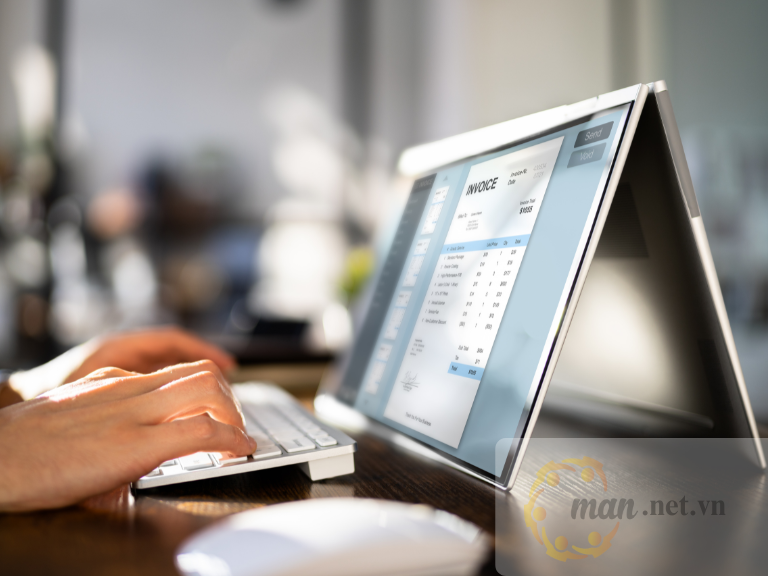
Definition of invoices for business households
A business household is a business establishment established by an individual or a household and is responsible for all of its assets. According to current regulations, invoices used for business households are usually invoices for the sale of goods and provision of services (excluding separate VAT) instead of value added tax invoices. The VAT Law clearly defines: value added tax invoices only apply to organizations and individuals declaring tax using the deduction method; business households are not in this category, so VAT invoices are not allowed.VAT information is not separated on the business household's sales invoice (no separate VAT).
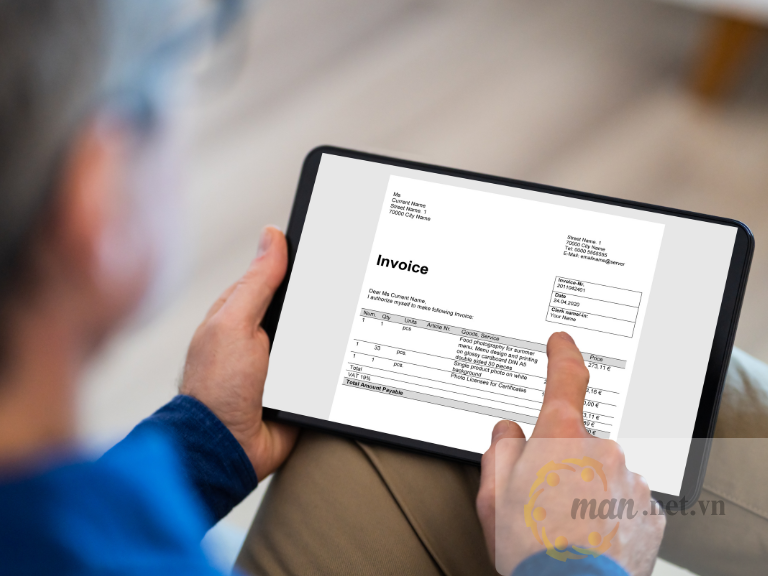
In the digital transformation era, electronic invoices for business households is an electronic document recording the sales transaction of a business household. This invoice can have a code from the tax authority (when using electronic signature software and transmitting data to the tax authority) or be an electronic invoice generated from a cash register (no need for a digital signature but must connect data to the tax authority). Previously, if not converted, the business household purchased paper invoices printed by the tax authority to declare; now, according to the new regulations, all must switch to electronic invoices.
In short, business invoice is a bill for the sale of goods/services issued by a household (a form of sales without separate tax). Currently, the state encourages the issuance of this bill in electronic form for convenient management and information lookup, reducing the risk of data loss.
Legal regulations on electronic invoices for business households
Decree 123/2020/ND-CP and Circular 78/2021/TT-BTC regulate the management and use of electronic invoices. Accordingly, from July 1, 2022, all business households and individual businesses must use electronic invoices. Specifically, Circular 78/2021 (Article 6) identifies cases where business households are required to use electronic invoices:
- Business households, individual businesses pay tax by declaration method (fixed tax rate applies) must use electronic invoices.
- Business households, individual businesses pay tax by lump sum method If there is a request for an invoice, the tax authority will issue a retail electronic invoice (sales type) for each occurrence.
- Business households, individual businesses tax declaration on each occurrence If an invoice is required, an electronic invoice will be issued each time.
In addition, business households in difficult socio-economic areas are allowed to postpone the use of electronic invoices for up to 12 months from July 1, 2022 if they do not have technological infrastructure or do not conduct electronic transactions with tax authorities.
Decree 70/2025 (June 1, 2025) supplements regulations on Invoices generated from cash registersAccordingly, the subjects required to use electronic invoices generated from cash registers are added: business households, business individuals with annual revenue of 1 billion VND or more and retail industries (shopping malls, supermarkets, shops), food services - restaurants - hotels; passenger transport, road transport support services, entertainment (movie screenings); other personal services (salons, spas, gyms, etc.). Electronic invoices generated from cash registers must be printed from devices with data connection to tax authorities and are not required to have digital signatures. These new regulations aim to increase transparency and prevent tax losses.
In short, nowadays All businesses must apply electronic invoices.. Business households with an annual income of over 1 billion VND or doing business in the above mentioned industries will have to use cash registers connected to taxes from June 1, 2025. These regulations help business households declare taxes more accurately and reduce paperwork.
Cases where electronic invoices must be created using cash registers (from June 1, 2025)
Pursuant to Decree 70/2025 and guidance from the tax authority, from June 1, 2025, business households and individuals in the following groups must create electronic invoices from cash registers:
- Revenue from 1 billion VND/year or more.
- Direct retail (shopping malls, supermarkets, retail stores; excluding cars, motorcycles, motorbikes and other motor vehicles).
- Food, restaurant, hotel industry: food service business, restaurant, hotel.
- Transportation and entertainment: passenger transport services, road transport support services, art and entertainment services (e.g. cinema).
- Other personal services: personal care services (salons, spas, gyms, etc.) by economic sector classification.
The above objects need to use electronic cash register (with electronic invoicing function and internet connection) to issue invoices. Invoices from cash registers still have legal value like regular electronic invoices. This requirement helps tax authorities accurately manage large revenues, increasing transparency in business.
Benefits of electronic invoices for business households
Electronic invoices bring many benefits to business households:
- Save money and time: No need to print or store paper; just software or electronic devices to create and send invoices.
Fast, automatic procedures: Completed invoices are automatically transmitted to the tax authorities. VAT and personal income tax declaration (if any) becomes simpler with available data. - Transparent management, easy to look up: Electronic invoice data is stored centrally, helping to easily summarize and compare revenue. This increase transparency and combat tax evasion.
Minimize loss and error: Electronic invoices cannot be burned, torn, or lost. Electronic data reduces calculation errors and can be backed up in case of emergency. - Serve customers better:Business households can send electronic invoices via email immediately after creation, creating convenience and professionalism for customers.
In general, electronic invoices help businesses reduce procedures, save costs and keep up with technology trends.
Instructions for implementing electronic invoices for business households
To apply electronic invoices, business households need:
- Register with the tax authorities: Submit the application at the Tax Department or via the General Department of Taxation's Electronic Invoice Portal. Choose to register online, fill in the information according to the form (01/DKTĐ-HĐĐT) and submit. The tax authority will respond via email within 1 day. If accepted, the business household will receive an account to use the system.
- Prepare infrastructure: Make sure you have a computer and internet connection. If you are required to, you need to have an electronic cash register registered with the tax authorities. If you use digitally signed electronic invoices, you need a valid digital certificate.
- Software/Device Selection: Use free electronic invoice software of the General Department of Taxation or of a licensed unit. For cash registers, choose products that meet the standards of Decree 70/2025 and are approved by the competent authority.
- Create and send invoices: When selling, enter information into the software/cash register; the system automatically generates an electronic invoice. Send the invoice to the customer via email or print the delivery receipt immediately after creation.
- Reporting and archiving: Use electronic invoice data for periodic tax declaration. Store electronic invoices (XML files) for at least 10 years as prescribed. Regularly check the tax portal to confirm that invoice data has been recorded.
Initial implementation may require some familiarity, but in the long run e-invoicing helps automate business processes and tax filings, reducing risk and paperwork.
Conclude
Electronic invoices are a modern and mandatory revenue management tool for business households. Business invoice is an invoice for the sale of goods and services (in electronic form). According to regulations, all business households must switch to electronic invoices from July 1, 2022. From June 1, 2025, business households with a revenue of 1 billion VND/year or operating in specific industries will Required electronic invoices generated from cash registersCompliance with this regulation makes it easier for businesses to be financially transparent and comply with the law.
In addition, readers can contact MAN – Master Accountant Network to receive professional consultation and advice to help solve problems quickly and accurately through:
- Mobile / Zalo: 0903 963 163 – 0903 428 622
- E-mail: man@man.net.vn