
Cost accounting is becoming an indispensable tool in business management in the Industry 4.0 era, where accurate data determines the speed and quality of decision-making. By providing in-depth information on cost structure, operational performance, and product pricing, cost accounting helps businesses control resources, optimize processes, and increase profitability. Thanks to its high applicability and solid foundation in accounting standards and management practices, this field is increasingly important in operational strategy – in line with the spirit of modern businesses.
What is cost accounting?
Cost accounting is a specialized function focused on recording, classifying, analyzing, and reporting costs incurred in production and business operations. Its purpose is to provide detailed information to help management make internal decisions, optimize processes, determine costs, control waste, and improve profitability, unlike external financial accounting.
What is the role of cost accounting?
In a business, cost accounting plays the following important roles:
- Cost management and control: Cost accounting is responsible for classifying expenses into groups such as direct costs, primary production costs, selling expenses, or factory expenses. Thanks to this classification system, businesses can easily track the flow of costs, assess resource consumption, and determine the profit generated from each process or activity.
- Determining and calculating product costs: One of the core tasks of cost accounting is measuring the cost of resources used in the production process. This data helps managers accurately estimate product costs, providing a basis for developing appropriate pricing policies and ensuring profitability.
- Supporting operational control: Timely provision of cost information to management departments helps businesses identify risks, minimize operational errors, and optimize performance. Simultaneously, when leaders implement effective cost management measures, businesses can reduce waste and improve profit margins.
- Strategic orientation: Data compiled by cost accounting is long-term in nature, reflecting the current financial and operational picture of the business. This forms the foundation for management to develop sound cost allocation strategies, plan objectives, and make sustainable development decisions.
Distinguishing between Cost Accounting, Financial Accounting, and Management Accounting
To understand the role of Cost Accounting within the overall corporate accounting system, it is necessary to place Cost Accounting alongside Financial Accounting and Management Accounting This will help to clearly see the differences in purpose, target audience, and operating principles. The table below summarizes the core differences between the three fields, helping businesses better understand the specific functions of each type of accounting.
| Characteristic | Cost accounting | Financial accounting | Management accounting |
| Purpose | Determine the cost of the product. | Reporting to external parties (shareholders, tax authorities). | Support internal management decision-making. |
| Object | Cost of production or service | All economic activity | Non-financial and financial information is internal. |
| Principle | Flexible, depending on management needs. | Strict adherence to VAS and IFRS is mandatory. | Flexible |
The core purpose of cost accounting is to ensure that every dollar spent is tracked and linked to the product or service produced.
History and new development trends of Cost Accounting
Initially, cost accounting focused only on job costs and process costs to determine the cost of goods sold. However, the development of manufacturing technology and the increase in overhead costs (e.g., automation costs, R&D costs) have spurred the emergence of more advanced systems:
- Activity-based costing: Developed to allocate overhead costs more accurately.
- Lean Accounting: A new trend focused on eliminating waste, suitable for lean manufacturing models.
This shift shows that cost accounting must constantly adapt to maintain its role as an accurate tool for measuring business performance.
Classification and analysis of cost behavior
Cost classification is a fundamental step in a cost accounting system, helping managers understand the nature and response of each cost type to changes in business operations.
Classification by function
Production costs are composed of three basic elements:
- Direct materials: These are the costs of materials that directly constitute a product and can be easily traced back to that product (for example, wood in furniture manufacturing, steel in automobile manufacturing).
- Direct labor costs: These are the wages and related deductions of employees directly involved in the product manufacturing process (e.g., assemblers, machine operators).
Manufacturing overhead (MOH) refers to costs incurred within a factory but which cannot be economically traced directly to each specific product. MOH presents the biggest challenge in cost accounting because it needs to be allocated. MOH includes:
- Indirect materials: Machinery lubricants, general packaging materials.
- Indirect labor: Salaries of supervisors, factory security guards.
- Other costs: Depreciation of factory buildings, factory insurance, shared utilities (electricity and water).
Classification based on relationship with activity level
Understanding cost behavior is crucial for cost-volume-profit analysis in cost accounting.
Variable costs
Variable costs vary proportionally with changes in the level of activity (number of products, machine hours, labor hours). Variable costs per unit of product remain fixed.
For example: Sales commission
Fixed costs
Fixed costs per unit of product remain constant within a certain range of related operations, regardless of how the level of activity changes. Fixed costs per unit of product will decrease as output increases.
Fixed costs will include two types:
- Committed Fixed Costs: Difficult to change in the short term (Depreciation, rent).
- Discretionary Fixed Costs: These can change at the discretion of management (Advertising, R&D).
Mixed costs
It includes both variable and fixed components (for example, utility bills have both fixed subscription fees and variable usage fees).
Cost breakdown method:
- High-Low Method: Uses the highest and lowest activity levels to determine variable and fixed components.
- Regression analysis: Uses statistics to determine a more precise relationship between costs and activity levels.
Classification by decision-making purpose
To help businesses analyze and make more accurate decisions in cost management, a thorough understanding of the nature of each cost type is essential. The three cost groups below are crucial foundations in all decision-making models and are briefly presented in the following table for easy reference and application.
| Type of expense | Opening | Key features to note |
| Cost difference | This refers to the cost difference between different options. For example, the difference in material costs between supplier A and supplier B. | This is Costs to consider because they direct impact This leads to future decisions. |
| Opportunity cost | It's an overlooked benefit when choosing one option over the next best option. This is a cost that isn't expressed in cash, but has economic value. | It is very important in administrative cost accounting. It must always be taken into account to avoid choosing an option that negates potential benefits. |
| Sunk costs | These are costs incurred in the past and cannot be changed, regardless of current or future decisions. For example, the cost of purchasing a machine that has been depreciated. | Sunk costs should not be included in the analysis when making decisions. Sunk costs are not related to the future and should therefore be eliminated. |
Overall, correctly distinguishing between different types of costs will help managers evaluate options accurately, avoiding common decision-making mistakes. When applied correctly, this not only optimizes costs but also increases the long-term strategic effectiveness of the business.
Main cost accounting systems

A cost accounting system is a set of procedures for collecting, classifying, and allocating overhead costs. Choosing the right system is crucial.
Job costing
This method is used for businesses that produce unique, differentiated, or custom-ordered products or services (e.g., construction companies, auto repair shops, film studios, consulting firms).
The cost aggregation process, specifically:
- Job cost card: This is a central document that directly tracks the materials, labor, and general manufacturing overhead costs allocated to each job or order.
- Direct cost aggregation: Materials and labor are recorded directly on the cost card when incurred.
- Allocation of manufacturing overhead costs: Manufacturing overhead costs are calculated and allocated according to a predetermined ratio, based on the allocation basis (e.g., machine hours, direct labor hours).
Implementing job costing requires close monitoring of each individual order.
Cost accounting by process
Used for businesses that mass-produce, homogenize, and continuously produce goods across stages or departments (e.g., breweries, cement factories, oil refineries, paper mills).
Calculate equivalent units
Because costs accumulate continuously across departments, process-based costing must utilize the concept of equivalent units to convert the quantity of work-in-progress into an equivalent quantity of finished goods.
Cost calculation method:
- Weighted-Average Method: Combine the costs of the previous period with the costs of the current period to calculate the average unit cost.
- First-In, First-Out (FIFO) Method: Separates the cost of products starting from the previous period from the cost of products starting from the current period. FIFO provides more accurate information about the unit cost of the current period, useful for cost accounting control.
Standard cost accounting
Standard costing is a system for establishing target standard costs for direct materials, direct labor, and manufacturing overhead. Its primary purpose is to control costs by comparing actual costs to standard costs and analyzing the difference.
Gap analysis
Difference in direct materials:
- Price Difference: Due to the difference between the actual purchase price and the standard price.
- Quantity Difference: Due to using more or less material than specified in the standard.
Difference in direct labor costs:
- Price difference: Due to the actual salary differing from the standard salary.
- Performance Difference: Due to actual working time differing from the rated time.
Gap analysis is a powerful tool that helps cost accountants report performance and identify the causes of waste.
Activity-based costing
In modern manufacturing, overhead costs account for a large proportion of expenses and are often allocated inaccurately compared to traditional bases. Activity-based costing addresses this problem.
Cost accounting is based on the practice of allocating manufacturing overhead costs based on cost consumption.
Steps to implement activity-based costing:
- Identify activities: Classify the activities within the factory (e.g., machine setup, quality control, order processing).
- Identify the cost pool: Gather the costs associated with each activity.
- Select cost control measures: Choose a measure of the activity's consumption level (e.g., number of machine setups, number of inspection hours).
- Allocation: Calculate the cost ratio for each control item and allocate it to the product.
Activity-based costing provides a more accurate view of costs, especially for low-volume but high-complexity products, enhancing the reliability of cost accounting data.
Cost allocation and cost determination
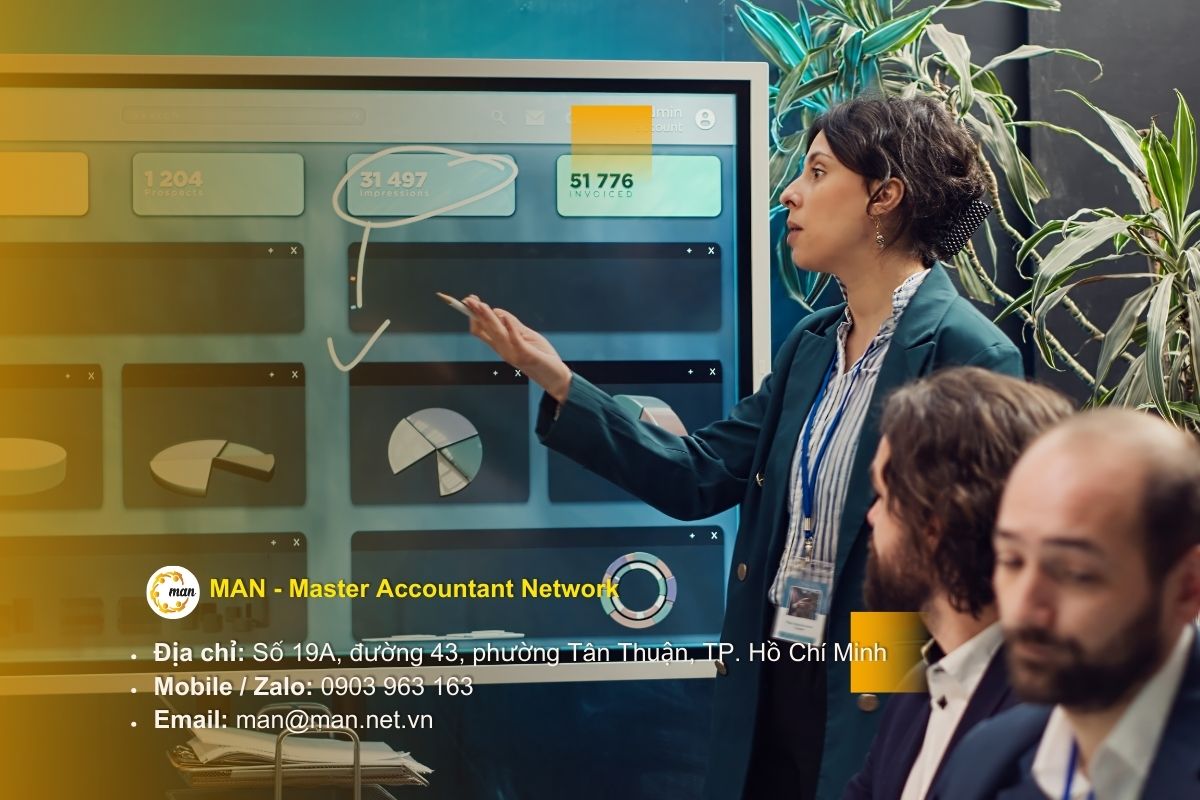
Cost allocation is one of the most complex tasks in cost accounting, directly impacting both cost and profit.
Allocation of manufacturing overhead costs
Manufacturing overhead (MOH) needs to be allocated to:
- Accurately calculate product costs according to accounting standards for external reporting purposes.
- Provides comprehensive cost data for pricing and managerial decision-making purposes.
Methods for allocating Internal Support Service Costs
Regarding the costs of internal support service departments (e.g., maintenance, canteen, personnel), these should be allocated to the production departments:
- Direct Method: Allocate the costs of support departments directly to the production department, ignoring services exchanged between support departments.
- Ladder method: Sequential allocation; the support department that has already received the allocation will not receive any re-allocated costs.
- The Inter-Departmental Allocation Method: This is the most complex method (often using matrices or algebra) and takes into account the interactions and mutual support services between all departments. This method provides the most accurate cost accounting results.
Accounting for the cost of by-products and concurrent products.
In some industries (e.g., oil refining, meat processing), a single production process generates many different products.
- Simultaneous Products: Products of significant value that are produced at the same time (e.g., gasoline, diesel from crude oil refining).
- By-product: A product with a much lower value than the main product.
Methods for allocating overhead costs
Overhead costs incurred up to the split-off point should be allocated to concurrent products:
- Net Realizable Value (NRV) Method: Cost allocation is based on the estimated net selling value (final selling price minus processing costs after separation) of each product. This is a common and preferred method in cost accounting.
- The Physical Quantity Method: Allocation based on weight, volume, or other product units. This method is simple but does not accurately reflect revenue-generating potential.
Cost-volume-profit analysis
Cost-volume-profit analysis is an essential tool of management cost accounting, helping to forecast profits based on the relationship between costs, sales volume, and revenue.
Break-Even Point (BEP)
The break-even point is the level of output or revenue at which total revenue equals total costs (profit equals zero).
The break-even point (BEP) is determined by the following formula:
|
BEP = Total Fixed Costs / Profit per Unit |
It helps managers set minimum sales targets and assess business risks.
Operating leverage
Operating leverage is the extent to which fixed costs are used in a company's cost structure.
The degree of operational leverage (DOL) is determined as follows:
|
DOL = Gross Unit Profit / Net Profit |
A business with high operating leverage (a large proportion of fixed costs) will experience rapid profit growth when revenue increases, but also faces a greater risk of losses when revenue decreases. Information from cost accounting is essential to manage this risk.
Integrating Cost Accounting into Businesses
To truly implement cost accounting effectively, businesses need to systematically deploy each component. The following content will delve into each key element, helping you clearly visualize how to integrate and apply it in practice.
Lean cost accounting
Lean costing developed in parallel with the lean manufacturing philosophy, focusing on eliminating waste in all processes.
Unlike traditional cost accounting, which focuses on detailed unit costs, lean cost accounting focuses on value stream costs. It measures performance and costs across the entire value chain.
The Role of Cost Accounting in Strategic Management
Cost accounting information is fundamental to many strategic decisions:
Value Chain Analysis
Value chain analysis extends the scope of costs beyond the production sector (including R&D, design, marketing, and customer service). Cost accounting helps identify non-value-adding activities that can be eliminated, thereby optimizing the entire chain.
Product pricing:
- Cost-Added Pricing: The selling price is determined by the total unit cost (provided by cost accounting) plus the desired profit margin.
- Target Pricing: A more modern method, starting from the target selling price (determined by the market) minus the desired profit margin, to determine the target cost. If current costs are higher than the target cost, the business must adjust and optimize its cost accounting system to achieve that target.
Cost accounting helps categorize quality costs into four groups: prevention costs, appraisal costs, internal failure costs, and external failure costs. Measuring these costs is the first step in minimizing avoidable errors.
Conclude
The application of cost accounting not only helps businesses control cash flow more effectively but also provides a foundation for strategic decisions on pricing, process optimization, and enhanced competitiveness. When the cost data system is properly designed and operated, all management decisions become clear, transparent, and based on actual data.
If your business needs to build or optimize its cost accounting system but doesn't know where to start, let the experts at MAN – Master Accountant Network guide you. MAN – Master Accountant Network is ready to help your business establish a suitable model, save costs, and increase management efficiency.
Contact information MAN – Master Accountant Network
- Address: No. 19A, Street 43, Tan Thuan Ward, Ho Chi Minh City
- Mobile/Zalo: 0903 963 163 – 0903 428 622
- Email: man@man.net.vn
Content production by: Mr. Le Hoang Tuyen – Founder & CEO MAN – Master Accountant Network, Vietnamese CPA Auditor with over 30 years of experience in Accounting, Auditing and Financial Consulting.
Editorial Board: MAN – Master Accountant Network