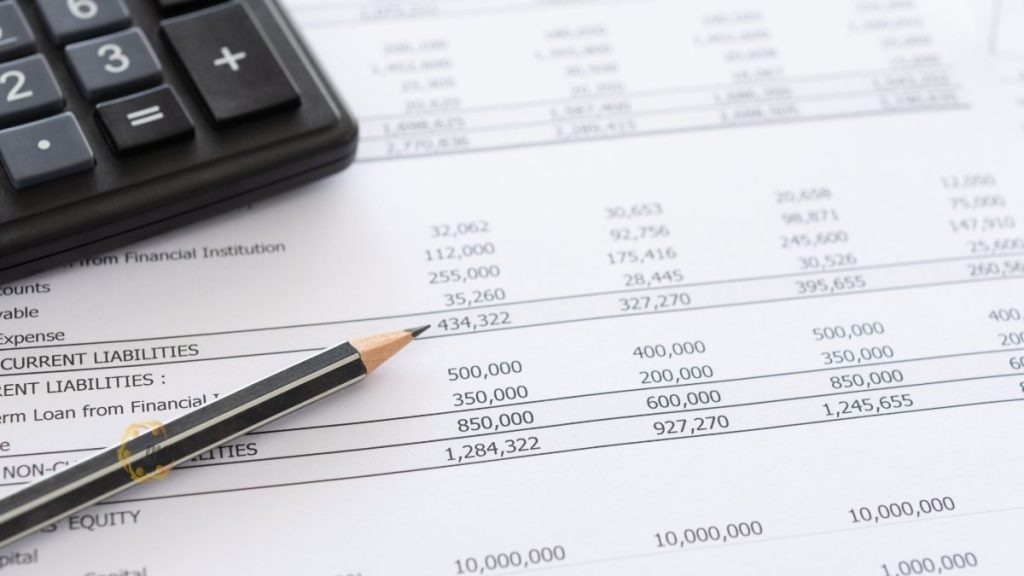
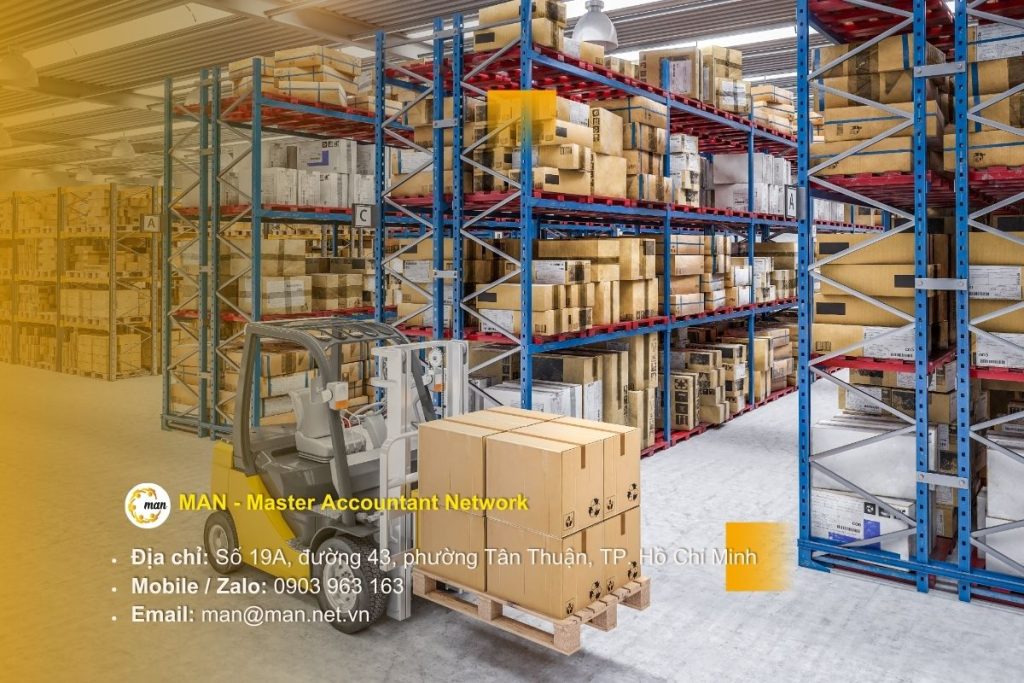
In the modern market economy, inventory accounting plays a vital role in the financial management of commercial enterprises. Poor inventory management not only leads to asset losses but also distorts financial reports, creating significant risks during tax settlements. This article will provide the most comprehensive overview of inventory accounting practices according to the latest regulations.
What is inventory accounting?
Inventory accounting is the process of tracking, recording, and reflecting the entire process of inventory changes within a business, including inventory receipts, shipments, and remaining stock, in terms of both quantity and value.
Specifically, inventory accounting focuses on:
- Record the value of goods entering inventory at their original cost (purchase price, procurement costs, non-deductible taxes, etc.).
- Monitor sales performance and determine the cost of goods sold.
- Managing physical inventory and inventory on paper.
- Detect and address discrepancies (excess, shortage, damage, and devaluation) in inventory.
In short, inventory accounting not only helps businesses control assets, but also forms the basis for accurately determining profits, tax obligations, and the reliability of financial reporting.
The Importance of Inventory Accounting in Businesses
Inventory accounting plays a crucial role in a company's warehouse and financial management system, serving as the foundation for the smooth flow of goods and cash. Specifically, inventory accounting provides the following benefits:
- Effective cost control: Fully track all expenses incurred related to goods, such as purchase price, transportation costs, warehousing costs, as well as losses due to spoilage or damage during storage.
- Increased profitability: Providing accurate data on the cost of goods sold helps businesses establish appropriate selling prices and improve profit margins.
- Scientific inventory management: Helps businesses accurately track inventory levels, preventing shortages that disrupt business operations or excess inventory that ties up capital.
- Ensuring compliance with legal regulations: This helps businesses adhere to current accounting standards and tax regulations, minimizing risks during audits and inspections.
- Basis for business decisions: Providing timely and reliable information for management to make decisions regarding purchasing, sales, production planning, and investment.
Core principles of commodity accounting
To ensure transparency and accuracy, accountants need to master the following principles of merchandise accounting:
Cost principle
Goods entering inventory must be recorded at their original cost. The original cost includes: the purchase price stated on the invoice, non-refundable taxes (import tax, excise tax), transportation, loading, unloading, and storage costs during the purchasing process, and other direct costs.
Principle of prudence
At the end of the accounting period, if the net realizable value of goods is lower than their original cost (due to damage, obsolescence, or a decrease in market value), the accountant must create a provision for inventory devaluation. This ensures that the company's assets are not reflected at a higher value than their actual value.
Principle of Consistency
Inventory valuation methods (such as FIFO or weighted average) must be applied consistently throughout the accounting period. If there is a change, the business must explain it in the Notes to the Financial Statements.
Accounting system and documents used
To properly account for goods and accurately reflect inventory value, businesses need not only a thorough understanding of accounting principles but also the correct selection of accounting accounts and documents for each specific transaction.
Accounting accounts
According to Circular 200/2014/TT-BTC, the main account is Account 156 – Goods.
- Account 1561: Purchase price of goods.
- Account 1562: Costs of goods purchased (Transportation, loading and unloading, etc.).
- Account 1567: Real estate goods.
In addition, there are:
- TK 151: Goods purchased are in transit.
- Account 157: Goods sent for sale.
- Account 632: Cost of goods sold.
Goods accounting documents
From 2025, 100% businesses will use electronic invoices in accordance with Decree 70/2025/ND-CP amending and supplementing Decree 123/2020/ND-CP regulating invoices and documents. The accompanying internal documents include:
- Warehouse Receipt or Warehouse Delivery Note.
- Inventory record.
- Customs declaration form (for imported goods).
After correctly identifying the accounting system and accounting documents applicable to inventory accounting, the next step is to apply these accounts to each actual transaction. In the following section, MAN – Master Accountant Network will delve into the detailed accounting methods for inventory, helping accountants understand how to record inventory receipts, shipments, sales, and handle situations arising in the business.
Detailed accounting method for goods
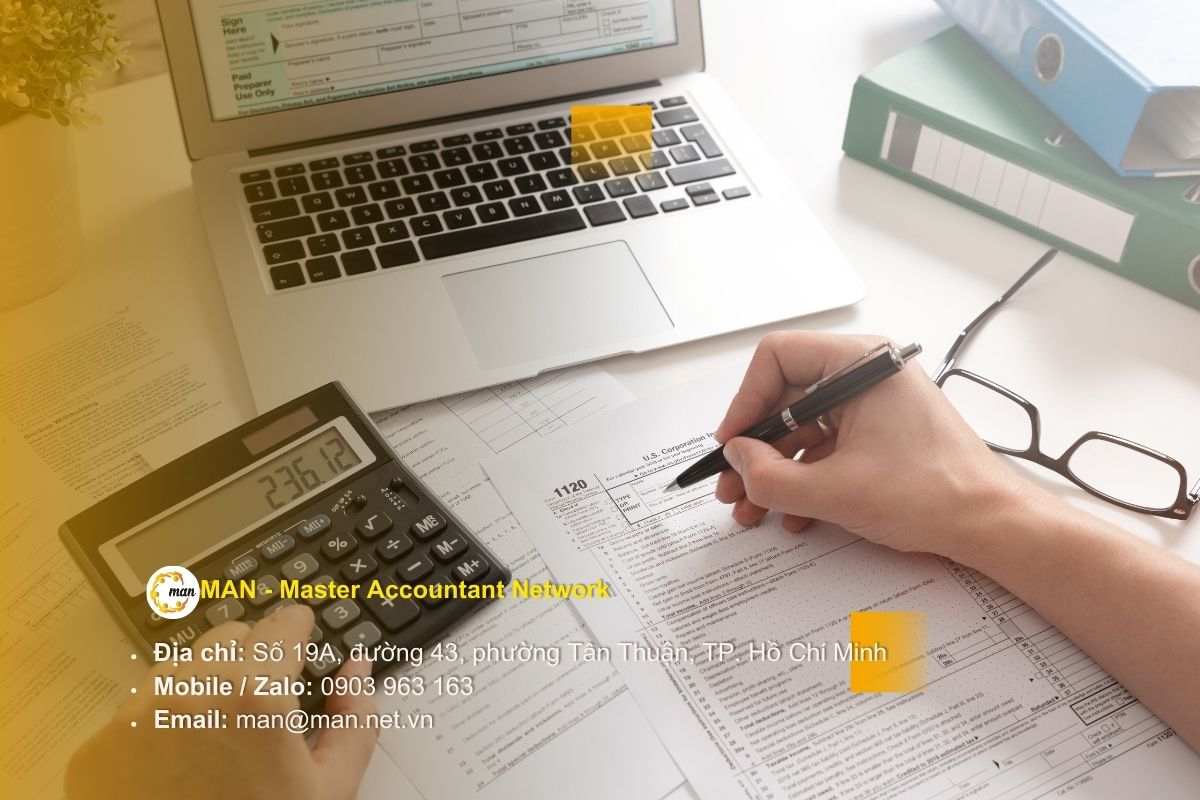
To accurately record changes in inventory within a business, accountants need to apply detailed accounting methods for each transaction, from inventory receipts and shipments to sales and specific transactions such as exchanges or goods held in custody. Each transaction requires a separate journal entry to ensure that the value of goods, cost of goods sold, and revenue are accurately reflected in the financial statements.
Accounting for goods received into inventory.
When purchasing goods and receiving them into the warehouse, based on the invoice and warehouse receipt:
Cases where VAT is deductible:
- Debit Account 156 (1561): Purchase price excluding tax.
- Debit Account 133 (1331): Deductible VAT.
- Accounts 111, 112, and 331 represent the total payment amount.
In case any procurement costs (transportation, loading and unloading) are incurred:
- Debit Account 1562: Pre-tax purchase expenses.
- Debit Account 1331: Value Added Tax (VAT).
- There are accounts 111, 112, 331…
For example: Company A purchased 1,000 mobile phones at a price of VND 10,000,000 per unit (excluding tax), with VAT of 10%. External transportation costs amounted to VND 5,000,000 (excluding VAT of 10%).
- Goods received into inventory: Debit Account 1561 (10 billion VND), Debit Account 1331 (1 billion VND) / Credit Account 331 (11 billion VND).
- Shipping costs: Debit Account 1562 (5 million), Debit Account 1331 (500 thousand) / Credit Account 111 (5.5 million).
Inventory and sales accounting
Inventory accountants must perform two journal entries simultaneously:
Journal Entry 1: Reflecting revenue
- Debit accounts 111, 112, 131: Total payment amount.
- Account 511: Sales revenue (price excluding tax).
- Account 3331: Value Added Tax Payable.
Journal entry 2: Reflecting the cost of goods sold.
- Debit Account 632: Cost of Goods Sold.
- Account 156: Value of goods withdrawn from inventory.
For example: Company A sells 100 mobile phones at a price of VND 15,000,000 per unit, excluding tax.
- Recording revenue: Debit Account 131 (1.65 billion VND) / Credit Account 511 (1.5 billion VND), Credit Account 3331 (150 million VND).
- Recording cost of goods sold: Debit Account 632 (1 billion VND) / Credit Account 156 (1 billion VND).
Accounting for the exchange of similar goods
This is a specific type of transaction where a business exchanges one type of goods for another of equivalent value and intended use.
In principle, no revenue or expenses are recognized. The value of goods received is recorded at the remaining value of the goods exchanged.
Then the accounting entry is:
- Debit account 156 (goods received).
- Account 156 (goods for takeout) exists.
For example: The company exchanged 10 HP computers for 10 Dell computers of the same configuration and listed value of VND 20,000,000 each for display purposes.
- Accounting entry: Debit Account 156 – Dell (200 million VND) / Credit Account 156 – HP (200 million VND).
Accounting for goods held in custody according to Circular 200
According to the latest regulations in Circular 200, goods held in custody or goods received for sale on behalf of others are no longer reflected in off-balance sheet accounts (such as the old Account 002).
- Procedure: Accountants only track details in the company's management ledger and inventory management system. During inventory checks, goods held on consignment must be completely separated from goods owned by the company to avoid discrepancies in financial reporting.
For example: Customer B paid for 50 washing machines but did not take delivery and left them at Company A's warehouse.
- The accountant recorded the revenue and the goods shipped (Debit 632 / Credit 156).
- At the warehouse: The warehouse manager created a separate inventory card for these goods, noting "Goods held on behalf of customer B". In the detailed accounting records, there is no longer a balance of these 50 washing machines in the company's warehouse.
Methods for calculating the cost of goods sold.
The choice of pricing method directly impacts profit for the period:
First-In, First-Out (FIFO) method: This method assumes that the goods that are received first will be shipped first. In inflationary conditions, this method reduces the cost of goods sold and increases profits.
Weighted average method: This is the most common method.
- Period average: Calculated once at the end of the month. The advantage is simplicity, but it doesn't provide real-time updated values.
- Weighted average cost: Recalculates the price after each inventory receipt. Compatible with modern accounting software.
Specific identification method: This method is only applicable to businesses selling highly distinct, high-value goods.
Inventory and discrepancy handling procedures
At the end of the period, the inventory accountant, in coordination with the warehouse manager, conducts a physical inventory count.
Excess stock during inventory
The accounting entry would then be as follows:
- Debit account 156.
- There is account 3381 (Excess assets awaiting disposal).
After identifying the cause, record it as other income (Account 711) or reduce the cost of goods sold.
Items missing during inventory check.
The accounting entry in this case is as follows:
- Debit account 1381 (Assets awaiting processing).
- Account number 156 exists.
Compensation (Account 1388) is recorded as other expenses (Account 811) or cost of goods sold, depending on the decision of the board of directors.
Important notes

Below are important notes and specific guidelines to help accountants avoid errors, optimize accounting, allocate costs, and manage inventory effectively:
- Allocation of Procurement Costs (Account 1562): Many accountants make the mistake of directly including transportation costs in administrative expenses or cost of goods sold for the period. According to accounting standards, procurement costs should be allocated to inventory and goods sold.
- Inventory and Accounting Reconciliation: On a weekly or monthly basis, the inventory accountant must reconcile the "Detailed Inventory Register" with the warehouse manager's "Inventory Card". Any discrepancies in quantity must be documented and corrected immediately.
- Negative inventory issue in the software: This is a common error caused by shipping goods before creating the receiving invoice or by incorrect units of measurement. Accountants need to address this by reviewing the accounting timing or making adjusting entries before closing the books.
Conclude
Inventory accounting is not just a record-keeping task, but also a tool for managing assets and optimizing profits for commercial businesses. Mastering accounting principles and methods, as well as effective inventory management, will help you minimize tax risks, control costs, and improve business efficiency.
Contact MAN – Master Accountant Network for detailed support and advice!
Contact information MAN – Master Accountant Network
- Address: No. 19A, Street 43, Tan Thuan Ward, Ho Chi Minh City
- Mobile/Zalo: 0903 963 163 – 0903 428 622
- Email: man@man.net.vn
Content production by: Mr. Le Hoang Tuyen – Founder & CEO MAN – Master Accountant Network, Vietnamese CPA Auditor with over 30 years of experience in Accounting, Auditing and Financial Consulting.
Answers to frequently asked questions about inventory accounting.
Can a business change its inventory valuation method mid-year?
No. The method for calculating the cost of goods sold must be applied consistently throughout the fiscal year. Any changes can only be made from the beginning of the following fiscal year and must be clearly explained.
How are goods damaged due to natural disasters or accidents handled?
An inventory report must be prepared to determine the extent of the damage. The value of the damage, after deducting any insurance coverage (if applicable), will be included in the production and business expenses for the period.
Are shipping and handling costs included in the cost of goods sold?
Yes. According to accounting standards, procurement costs must be allocated to inventory and goods sold, and cannot be ignored or directly included in administrative expenses unless specifically stipulated otherwise.
Should small businesses apply Circular 200 or Circular 133?
For small and medium-sized enterprises, Circular 133 simplifies the accounting system. However, if the business plans to expand, list on the stock exchange, or manage inventory in detail, Circular 200 is the optimal choice.
MAN Editorial Board – Master Accountant Network