The Value Added Tax (VAT) Law No. 49/2024/QH15 has been officially passed by the National Assembly and will take effect from July 1, 2025. This change has caused considerable concern among businesses regarding uncredited VAT amounts from previous periods. Will VAT amounts incurred before July 1, 2025, be subject to the new refund policy? Especially in light of ongoing interest from the accounting community regarding guidelines such as Circular No. 6068/CT-CS on VAT policy, this article will clarify these important transitional regulations.
Effective date of the new Value Added Tax Law and its guiding documents.
The 2024 Value Added Tax Law provides a clear roadmap for change. Essentially, the entire law will take effect from July 1, 2025. However, businesses need to be aware of some specific dates:
- From July 1st, 2025: All new regulations regarding taxable subjects, tax rates, and tax refund conditions will be applied.
- From January 1, 2025: Some provisions in Clause 4, Article 15 relating to fertilizers and agricultural machinery will take effect earlier to support production.
- Policy reference: Businesses should regularly monitor Circular No. 6068/CT-CS on VAT policy and equivalent documents to stay informed about adjustments to invoices and supporting documents during this transition period.
Principles for applying tax refunds on a periodic basis.
This is the core information that helps businesses accurately determine the tax policy to apply. The basic principle is: For VAT refunds for a specific period (month or quarter), the tax policy in effect at that time (month or quarter) should be applied.
Specifically, for businesses that export goods and services:
- Before July 1, 2025: If a business has uncredited input VAT of VND 300 million or more, is eligible for a refund, and meets all the conditions stipulated in the old law, then when requesting a refund for periods prior to this date, the business will still apply the current tax policy.
- From July 1, 2025 onwards: When requesting VAT refunds for tax periods arising from this date, businesses must comply with the new regulations, conditions, and standards for VAT refunds as stipulated in Law No. 49/2024/QH15.
- Administrative procedures: Regardless of the tax policy applied, the tax refund procedure must be carried out in accordance with the current regulations of tax administration law at the time of application submission.
This means that tax policy is linked to the "time when obligations and rights arise" of that tax period. Understanding Circular No. 6068/CT-CS on VAT policy will help accountants avoid confusion when separating tax refund applications between the two periods.
Which law governs the refund of VAT incurred before July 1, 2025?

Based on Article 15 of Law No. 49/2024/QH15 on transitional provisions, the handling of tax liabilities arising before July 1, 2025 is classified as follows:
This applies to investment projects.
For projects currently in the investment phase, any VAT incurred before July 1, 2025, that has not been fully deducted will continue to be processed according to the provisions of Law No. 13/2008/QH12 (the old law). This means that businesses will still retain their right to tax refunds under the old conditions and will not be forced to apply the stricter criteria (if any) of the new law to the previously generated sales revenue.
In the case of exported goods and services
Similar to investment projects, export transactions completed before July 1, 2025, but for which tax refund applications have not yet been filed or are awaiting approval, will be subject to the regulations on documentation, procedures, and conditions for tax refunds in effect at the time of occurrence. The contents of Circular No. 6068/CT-CS on VAT policy also emphasize adherence to the correct timing of tax liability establishment to ensure transparency.
New regulations on tax refunds from July 1, 2025 that businesses need to know.

Although existing liabilities are retained, businesses will face a new "game" after July 1, 2025:
- Expanding the scope of tax refunds: The new law clarifies tax refunds for investment projects within the same province or city, as well as cases of business splits or mergers.
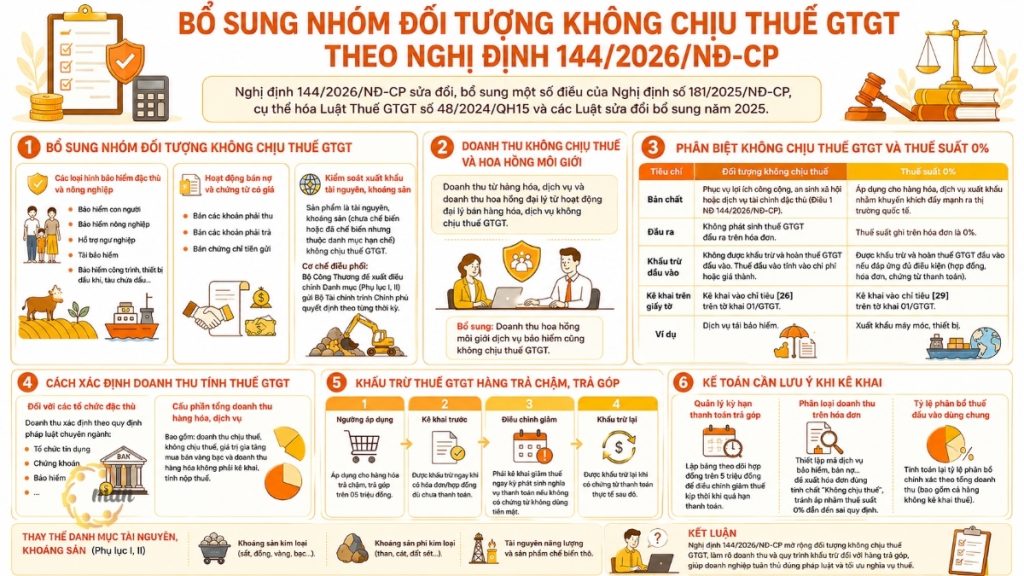
- Tax rate change: Fertilizers and specialized agricultural equipment are now subject to the 5% tax rate, moving from tax-exempt status to tax rate 5%. This allows domestic manufacturers to deduct or receive a refund of input tax that was previously included in their costs.
- Tax Offsetting Procedure: Detailed instructions on how to offset VAT between different business activities before requesting a refund.
Official document No. 6068/CT-CS regarding VAT policy will help the accounting department determine the most optimal way to classify input invoices during this period.
A guide for businesses on how to handle the transition optimally.
To protect their rights and avoid legal risks, businesses should take the following steps:
- Review of tax balances: Accurately summarize and classify the VAT amounts incurred before July 1, 2025 that are still outstanding on tax returns.
- Complete your application early: For projects that were eligible for tax refunds under the old law, you should submit your application before June 2025 to avoid confusion when the tax authorities change the form system according to the new law.
- Updating knowledge: Regularly consult guiding documents such as Official Letter No. 6068/CT-CS on VAT policy to understand how to apply the 5% tax rate to new items starting from 2025.
Overall, the key to handling this transition period is a clear distinction between the "period of occurrence" and the "applicable law." Proactively reviewing accounting data and comparing it with the guidelines in Circular No. 6068/CT-CS on VAT policy will help businesses not only protect their accumulated tax but also prepare for positive changes in agricultural tax rates from 2025 onwards.
Conclude
In summary, VAT liabilities arising before July 1, 2025, will not be negatively affected by the changes in the new law thanks to transparent transitional provisions. Businesses will still be able to exercise their right to deduct and refund VAT according to the old regulations for tax periods before July 1, 2025. However, early preparation and a thorough understanding of the guidelines from Circular No. 6068/CT-CS on VAT policy are key to ensuring smooth business operations and optimizing cash flow in 2026.
Contact MAN – Master Accountant Network for advice on changes in regulations and updates to new tax policies!
Contact information MAN – Master Accountant Network
- Address: No. 19A, Street 43, Tan Thuan Ward, Ho Chi Minh City
- Mobile/Zalo: 0903 963 163 – 0903 428 622
- E-mail: man@man.net.vn
Other services
- Auditing: Auditing Services, Construction Auditing Services, Financial statement audit services
- Accounting and Taxation: Tax accounting services, Tax report, Transfer Pricing Advisory. Tax Accounting Services, Tax reporting services, Transfer Pricing Service, Affiliate Trading Service
- Legal aspects: Work permit services, Business registration certification services, Investment Certificate
- Other: Transfer Pricing Service, Affiliate Trading Service, Business Operations Consulting Services
Content production by: Mr. Le Hoang Tuyen – Founder & CEO MAN – Master Accountant Network, Vietnamese CPA Auditor with over 30 years of experience in Accounting, Auditing and Financial Consulting.
Source: Official document No. 6068/CT-CS December 17, 2025, from the Tax Department regarding VAT policy.
MAN Editorial Board – Master Accountant Network