
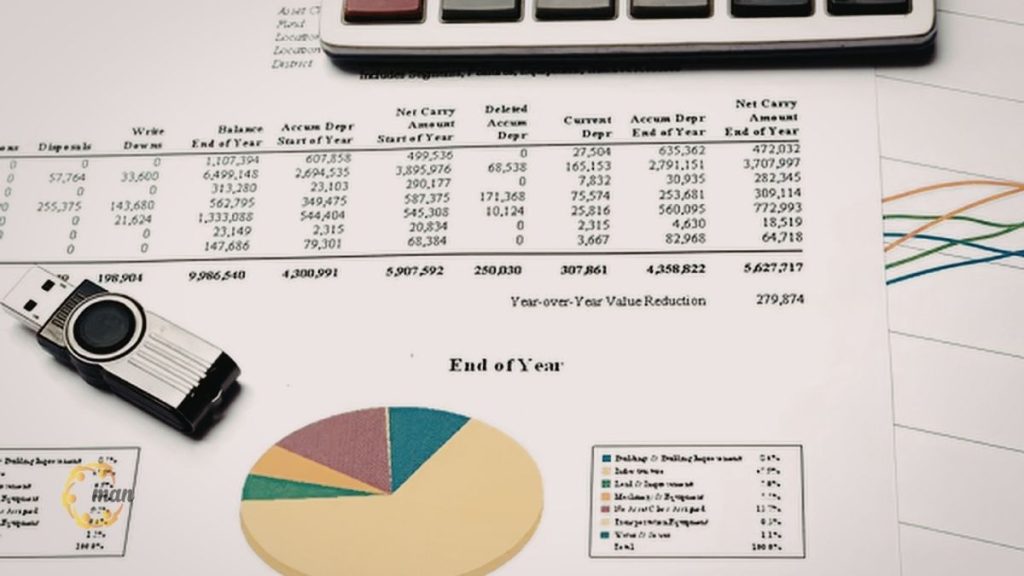
In corporate governance, financial statements are not only a reflection of financial health but also a crucial basis for tax authorities to determine budgetary obligations. However, due to the large volume of transactions or continuous changes in tax policies, errors are unavoidable. The question is: Will submitting incorrect financial statements result in penalties? If so, what are the penalties, and how can businesses minimize this legal risk in 2026?
The article below will provide an in-depth analysis based on Law on Tax Administration 2019 and Decree 125/2020/ND-CP to help business owners and accountants gain the most comprehensive understanding.
Legal implications: Will submitting incorrect financial reports result in penalties?

To accurately answer the question of whether submitting incorrect financial reports will result in penalties, let's distinguish between two core factors with MAN – Master Accountant Network:
- Time of error detection
- Consequences for tax revenue.
According to current regulations, submitting incorrect financial reports does not automatically result in immediate administrative penalties for tax violations. Vietnamese law always reserves a certain space for voluntary correction and the self-awareness of taxpayers. Specifically:
- If the business detects and corrects errors promptly: When a business realizes that the data in the submitted financial statements contains errors (such as accounting mistakes, omitted invoices, or incorrect application of accounting policies, etc.), the business has the right to submit supplementary declarations. In this case, the question of whether submitting incorrect financial statements will result in penalties will be answered with NO, provided that the supplementary declaration takes place before the tax authorities announce a decision to conduct an inspection or audit at the taxpayer's premises.
- If discovered during an inspection or audit: This is the riskiest scenario for any business. According to Clause 2, Article 47 of the 2019 Tax Administration Law, even if the tax authority or competent agency has announced a tax inspection or audit decision at the taxpayer's premises, the taxpayer is still allowed to submit supplementary tax returns. However, this "late rectification" will not help the business avoid administrative penalties. At this point, the tax authority will impose administrative penalties for tax management violations as stipulated in Articles 142 and 143 of this Law.
In summary, whether or not a company is penalized for submitting incorrect financial statements depends closely on its proactive approach in reviewing data and the timing of submitting corrective documents.
Basis for penalties when submitting incorrect financial reports resulting in tax shortfalls.
When the act of submitting incorrect financial reports results in the amount of tax payable to the state budget being lower than the actual amount (referred to as under-declaration of tax), the enterprise will face the penalties stipulated in Article 16 of Decree 125/2020/ND-CP. This is the core legal provision for determining the level of financial responsibility that enterprises must bear for their errors.
In many cases, errors stem from inconsistent accounting systems or the loss of documents over time. To ensure absolute accuracy before tax authorities intervene, businesses can refer to the following guidelines. accounting record reconstruction services Professionals will review and consolidate all outdated financial data.
The penalty amount is 20%, representing the amount of underdeclared tax.
Corporate accountants are wondering whether submitting incorrect financial statements will result in penalties, and if so, what the specific amount will be. The most common penalty applied is under penalty code 20%. Specifically, the tax authorities will penalize the amount of underdeclared tax or the amount of tax that has been exempted, reduced, or refunded in excess of regulations for any of the following actions:
- Incorrect tax declaration: This refers to situations where actual economic transactions have occurred and have been fully and truthfully reflected in the accounting system, invoices, and legal documents. However, due to negligence in applying tax rates, calculation methods, or incorrectly determining cases eligible for tax exemptions, reductions, or refunds, an underpayment of tax is resulted.
- Voluntary submission of supplementary financial statements but delayed in timing: This is a situation where a business has submitted supplementary financial statements and tax return forms, and has paid the outstanding tax amount to the government. However, this action occurred after the tax authorities announced the inspection decision and before the tax authorities concluded their inspection at the company's headquarters. In this case, submitting incorrect financial statements is still considered an administrative violation, but the penalty under Article 20% is considered significantly lighter than tax evasion (penalty ranging from 1 to 3 times the amount).
- The act of falsely declaring tax evasion for the first time: In some cases, the competent authority initially records a report identifying the act as tax evasion. However, if the taxpayer, being a first-time offender, proactively submits a supplementary declaration and pays the full amount of tax to the state budget before the official penalty decision is issued, this act will be recorded by the tax authority as falsely declaring tax and resulting in a tax shortfall.
- Errors leading to underpayment of taxes on related-party transactions: For foreign-invested enterprises or corporations, incorrect declarations resulting in underpayment of taxes on related-party transactions are also subject to penalty under Article 20%, provided that the taxpayer has prepared documentation determining market prices or has prepared and submitted all required appendices as stipulated in the tax management regulations for enterprises with related-party transactions.
Mandatory remedial measures
The consequences of submitting incorrect financial reports, including penalties, extend beyond administrative fines. Businesses must also implement corrective measures to protect the interests of the national budget.
- Mandatory payment of outstanding taxes: Businesses must repay the entire amount of unpaid taxes, or any tax refunds, exemptions, or reductions exceeding those stipulated by law.
- Late payment penalty for taxes: This can be considered interest accrued on the period during which a business is late in fulfilling its tax obligations. The late payment penalty is calculated according to the current Tax Administration Law at 0.031 TP3T/day. This explains why, even if a business discovers an error in submitting financial statements on its own, they still have to pay a significant additional amount if the error persists.
- Mandatory adjustment of related figures: If the submission of incorrect financial statements affects the tracked losses or the amount of input value-added tax deductible and carried forward to the next period, the business is required to adjust these figures accurately in its books and current period tax return.
Statute of limitations for penalties and special cases
Another important issue that directly answers the question of whether submitting incorrect financial reports will result in penalties is the statute of limitations for administrative penalties. The law stipulates that the statute of limitations for penalties related to tax violations is typically 5 years from the date the violation occurred.
If the statute of limitations for penalties has not expired: The business will have to bear all three charges:
|
Tax payable = Amount of tax owed + Late payment penalty + Fine 20% |
In cases where the statute of limitations for penalties has expired: Based on point a, clause 2, Article 16 Decree 125/2020/ND-CPHowever, taxpayers are not penalized under the aforementioned regulation 20%. Nevertheless, the regulation clearly states that businesses must still pay the full amount of outstanding tax, any tax refunds, exemptions, or reductions exceeding the prescribed limits, and late payment penalties to the state budget. This emphasizes that, even if incorrect financial reporting results in penalties and the deadline expires, tax liability is unavoidable.
Reference: If I submit an incorrect financial report, can I resubmit it?
Common real-life situations encountered in businesses.
To fully understand and correctly apply the regulations regarding penalties for submitting incorrect financial reports, we need to consider specific accounting situations that commonly arise:
The error does not alter the tax liability.
Many accountants worry about whether they will be penalized for submitting incorrect financial statements, especially when they only make a mistake in recording expense accounts (for example, confusing administrative expenses with selling expenses), but the total deductible expenses for corporate income tax purposes remain correct.
- Result: Total accounting profit and taxable income remain unchanged, and the amount of tax payable remains the same.
- Penalties: In this case, the business will not be penalized under Article 20% of Decree 125 because it did not cause tax evasion. However, the business may be subject to administrative penalties for violating accounting regulations (incorrect presentation of forms, incorrect principles) according to Decree 41/2018/ND-CP.
Errors reduce the number of holes being tracked.
For example: The company submitted financial statements showing a loss of 2 billion VND, but upon review, the actual loss was only 1.5 billion VND due to over-accounting of expenses. At that time, the company had not yet incurred any tax liability because it was still operating at a loss.
- Consequence: There is still a shortfall in the amount of tax payable to the state budget at the present time.
- Penalties: The business is not penalized for the underpaid tax (because the underpaid tax amount is zero). However, the business is required to adjust the carried-forward losses downward. This is an important step to prevent the business from using fictitious losses to reduce taxes later when it makes a profit, leading to a more serious violation. Therefore, the question of whether submitting incorrect financial statements will result in penalties leans towards adjusting the figures rather than imposing a cash fine.
Incorrectly declaring non-deductible expenses results in a shortfall in corporate income tax.
This is the most common case answering the question of whether submitting incorrect financial reports results in penalties. Businesses include expenses without valid invoices, welfare expenses exceeding the allowed limit, or expenses unrelated to production and business activities.
- Consequence: When the tax authorities audit and separate these expenses, taxable income will increase, leading to a shortfall in corporate income tax payable.
- Penalty: The business will certainly be fined 20% on the additional tax amount, plus late payment penalties calculated from the deadline for submitting the tax return for that year until the date the full amount is paid into the state budget.
Procedure for handling cases of incorrect financial report submissions.
If your business is worried about potential penalties for submitting incorrect financial reports, follow the process below to optimize your legal rights and minimize penalty costs:
Step 1: Conduct a comprehensive review and compare data.
The chief accountant or internal control department needs to conduct a complete reconciliation:
- The general ledger and detailed ledgers for accounts related to revenue and expenses.
- Compare the total figures on the business performance report with the corporate income tax return form 03/TNDN.
- Verify the electronic invoice data on the General Department of Taxation's system against the previously recorded data to detect any omitted or duplicate invoices.
Step 2: Prepare the supplementary declaration form in accordance with regulations.
According to Article 47 of the Law on Tax Administration, upon discovering an error, the enterprise must prepare the following:
- Supplementary declaration form 01/KHBS.
- Explanation for supplementary and adjusted declaration form 01-1/KHBS: Clearly explain which indicators are incorrect and the cause of the error (technical error, data mix-up, etc.).
- The revised financial report contains accurate figures and is being submitted to replace the old version.
Taking this step as soon as possible will answer the question of whether submitting incorrect financial reports will result in penalties in a way that benefits the business, because if done before an inspection decision is made, the business will avoid the 20% penalty.
Step 3: Proactively pay the full amount of outstanding tax and late payment penalties.
Don't wait until the tax authorities request it. Immediately after submitting the supplementary tax return, businesses should calculate the late payment penalty and pay it to the treasury right away. Paying early not only demonstrates goodwill but also helps avoid late payment penalties along with interest of 0.03%/day, saving the company a significant amount of money.
Step 4: Complete the archiving and explanation documents.
All corrective actions related to the submission of incorrect financial reports, including those that may result in penalties, must be carefully documented. The records should include minutes of internal meetings regarding the corrections, supporting original documents, and proof of payment to the state budget. This allows the business to confidently and transparently explain its actions during inspections.
Conclude
In summary, submitting incorrect financial reports does not mean a business completely loses the opportunity to rectify the situation, as the law still allows for resubmission and supplementary declarations if done at the right time and according to the correct procedures. The most important thing is for businesses to proactively review their data, detect errors early, and address them promptly before tax authorities conduct audits or inspections, thereby minimizing potential penalties.
If your business is concerned about resubmitting financial statements, settling taxes, or needs assistance reviewing accounting records to ensure compliance with the latest regulations, don't hesitate to contact the expert team at MAN – Master Accountant Network for in-depth, accurate, and optimal advice.
Contact information MAN – Master Accountant Network
- Address: No. 19A, Street 43, Tan Thuan Ward, Ho Chi Minh City
- Mobile/Zalo: 0903 963 163 – 0903 428 622
- Email: man@man.net.vn
Content production by: Mr. Le Hoang Tuyen – Founder & CEO MAN – Master Accountant Network, Vietnamese CPA Auditor with over 30 years of experience in Accounting, Auditing and Financial Consulting.
Frequently Asked Questions about whether submitting incorrect financial reports results in penalties
In this case, the business may be fined according to Decree 41/2018/ND-CP on administrative penalties in the field of accounting. The fine ranges from 5 to 10 million VND for the act of preparing financial statements that do not conform to the prescribed form or contain incomplete content.
Late payment penalties begin to accrue from the day following the last day of the tax filing deadline (usually March 31st of each year for the previous year's tax return) until the date the taxpayer pays the outstanding tax amount to the state budget.
The cash flow statement is an integral part of financial statements. While this item doesn't usually directly change the amount of corporate income tax payable, it affects the accuracy of the financial statements. You should resubmit an adjusted version to avoid penalties for misrepresentation of accounting information during a post-audit by the authorities. What is the penalty for submitting incorrect financial statements that does not result in any tax liability?
From what point in time are late payment penalties calculated when financial statements are submitted incorrectly?
If I submit the Cash Flow Statement with incorrect figures, do I need to resubmit it?






