The accounting process in commercial enterprises is no longer simply a matter of record-keeping, but has become a core "risk control system" for the business. Even a small error in recording inventory, cost of goods sold, or the timing of invoice issuance can lead to tax arrears, late payment penalties, and distort entire financial reports. This article will provide a comprehensive analysis of the accounting process for commercial enterprises according to the latest legal standards, clarifying each step from document control, purchase and sales accounting, accounts receivable management, cost of goods sold, to end-of-period work and tax settlement, helping businesses operate transparently, optimize taxes, and make accurate business decisions.
What is commercial accounting?
Commercial accounting is a specialized field of accounting that records, reflects, and controls all economic transactions arising from the buying and selling of goods by commercial enterprises, with the goal of generating profit from the difference between the purchase and sale prices, without going through the production process.
Commercial accounting focuses primarily on:
- Goods purchased and sold;
- Inventory and cost of goods sold;
- Revenue, accounts payable, and cash flow;
- Tax obligations arise from the circulation of goods.
Commercial accounting not only handles bookkeeping but also acts as a risk control department for tax and financial data within the business.
See more: Management accounting.
The duties of a commercial accountant

Depending on the size of the business, the work of a commercial accountant may be divided or combined, but essentially it will include the following main task groups:
Control and process purchase and sales documents.
Controlling and processing purchase and sales documents is a fundamental step in commercial accounting, determining the legality of expenses, revenues, and the entire tax obligation of the business. To minimize the risk of errors and ensure accurate accounting data, commercial accountants need to perform the following tasks:
- Verify the legality and validity of input and output invoices;
- Compare invoices with contracts, purchase orders, and warehouse receipts/delivery notes.
- Monitor the status of electronic invoices, ensuring they are created and digitally signed in accordance with regulations.
See more: Revenue accounting.
Accounting for purchases and inventory
Purchasing and inventory accounting is a crucial step in the accounting process of a commercial enterprise, as any discrepancies at this stage directly affect the cost of goods sold, profit, and tax obligations. To tightly control the value of goods and minimize the risk of negative inventory, accountants need to perform the following tasks:
- Record the value of goods entering the warehouse at their original cost;
- Allocate procurement costs (transportation, loading and unloading, insurance, etc.) to the goods;
- Track the quantity and value of inventory for each item and each warehouse.
Sales and revenue accounting
In commercial businesses, sales and revenue accounting is a crucial step that determines the accuracy of business results and tax obligations. Accurately recording sales at the right time, to the right recipients, and with complete documentation helps businesses control revenue transparently and minimize the risk of discrepancies during tax settlement. Specifically, accountants need to perform the following tasks:
- Recognize revenue at the time of transfer of ownership;
- Accounting for output VAT;
- Track revenue in detail by customer, contract, and sales channel.
Determine and account for the cost of goods sold.
Determining and accounting for the cost of goods sold is a crucial step that determines the accuracy of profit and tax obligations in a commercial enterprise. To properly control the cost of goods sold, accountants need to fully implement the following:
- Select and apply an appropriate cost calculation method;
- Accurate cost accounting is essential to reflect the true gross profit.
- Timely detection of discrepancies that cause inventory deficits or incorrect cost of goods sold.
Managing accounts receivable and accounts payable.
Managing accounts receivable and payable not only directly impacts cash flow but also reflects the financial security and operational efficiency of a business. To tightly control accounts receivable and payable, commercial accountants need to implement the following measures simultaneously:
- Monitor accounts payable and receivable from customers and suppliers;
- Reconcile accounts payable periodically;
- Collaborate with the sales and finance departments to manage cash flow.
See details: Accounts payable accountant.
Final cost and work completion
After all purchase, sale, and accounts receivable transactions have been fully recorded, commercial accountants need to perform cost aggregation and end-of-period processing to accurately reflect business results and ensure consistency and transparency in financial statements and tax reports. Key tasks include:
- Combine selling expenses and administrative expenses;
- Conduct an inventory count;
- Transfer revenue and expenses, prepare financial statements and tax reports.
Therefore, in commercial enterprises, commercial accounting plays a crucial role in ensuring legal compliance, protecting profits, and providing financial data for management and business decision-making.
The role of accounting in commercial enterprises
In commercial businesses, accounting plays a pivotal role in the financial management system, as demonstrated in the following aspects:
Ensure compliance with accounting and tax laws.
Commercial accounting helps businesses:
- Record all transactions accurately, completely, and promptly.
- Minimize the risk of being subject to tax arrears or penalties due to errors in invoices, cost of goods sold, and revenue.
- Comply with inspection and audit requirements from the tax authorities.
Inventory control and profit
Inventory typically represents a significant portion of a commercial business's assets. Commercial accounting helps to:
- Discovering slow-moving inventory and outdated goods;
- Accurately control the cost of goods sold.
- Accurately reflect the profit margin of each product group.
Providing data for business decisions.
Information from commercial accounting serves as the basis for the Management Board to:
- Set an appropriate selling price;
- Choose the optimal supplier;
- Adjust business strategy and cash flow management.
Connecting different departments within a business.
Commercial accounting serves as a bridge between:
- Purchasing, Inventory, Sales, and Finance Departments
- It helps to ensure that operational data is consistent, transparent, and controllable.
Because it plays a crucial role in controlling inventory, cost of goods sold, revenue, and tax risks, commercial accounting is only truly effective when businesses establish a systematic, consistent, and legally compliant commercial accounting process, from document control to accounting and end-of-period reporting.
Accounting procedures for commercial enterprises

An effective accounting process for a commercial enterprise not only ensures accurate figures but also supports cash flow control, tax compliance, and legally sound financial reporting. Below are the systematic steps an accounting task should take:
Step 1: Gather documents and invoices
This is the starting point for all accounting work, so please note:
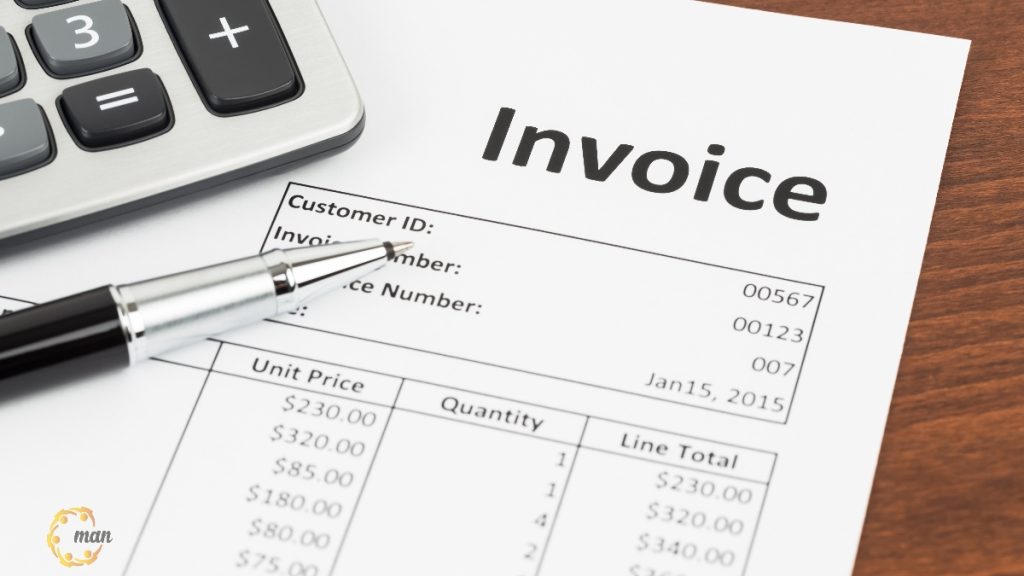
Invoices and supporting documents must adhere to the principles of: Legality – Reasonableness – Validity.
Legitimate invoices and documents
A legally valid invoice is an invoice that:
- Invoices are issued by the Ministry of Finance (General Department of Taxation) and granted by tax authorities to business organizations and individuals in accordance with regulations.
- Invoices are printed by the business itself according to standard templates and have been approved for use by the tax authorities.
- Invoices are issued proactively by businesses after completing the procedures for notifying the tax authorities about invoice issuance as required by law.
Risks related to input invoices:
- The business actually conducts transactions involving the purchase and sale of goods and services; financial records and invoices are complete and meet the conditions for cashless payment for expenses of 20 million VND or more. However, the problem arises because the goods and services provided do not fall under the registered business lines as stated in the company's business license.
For example: Company A signed a contract with Company B for the provision of transfer pricing services. However, Company A's business registration certificate does not include this business activity. Therefore, the invoice issued by Company A to Company B is illegal.
Valid invoices and documents
A valid invoice is one that is properly prepared in accordance with regulations and current accounting and tax practices, in which all mandatory information must be fully, clearly, and accurately presented. Specifically:
- The invoice must include the full date, month, and year it was issued.
- Information about the seller and buyer includes full names, business names, addresses, and tax identification numbers;
- Specify the payment method, such as cash or bank transfer, and include the bank account number (if applicable).
In addition, invoices must detail the goods and services, such as the serial number, name of the goods or services, unit of measurement, quantity, unit price, and total amount; information on the tax rate and VAT amount (if taxable); the total amount payable and the amount written in words to ensure transparency.
In addition to content requirements, a valid invoice must also meet the signature requirements as stipulated. Accordingly, the invoice needs to have the signatures of the seller, the buyer, and the legal representative. If the Director does not sign directly, the business must have a valid authorization document, with the authorized person signing the invoice and affixing the company seal in the upper left corner to ensure its legal validity.
A valid invoice
When referring to a legitimate invoice, we are essentially talking about a reasonable business expense. However, simply having a legally valid invoice is not enough to qualify for acceptance. The expense must also be reasonable, meaning the content on the invoice must be accurate, reflect the actual transaction, and have a direct connection to the business activities within the scope of the registered business activities stated on the Business Registration Certificate.
Bank documents
Bank documents are important supporting documents for accountants to record non-cash payment transactions of businesses. Common types of documents include:
- Debit notes: Payment orders, checks;
- Banknotes are issued when a business deposits or receives money into its account.
- Bank accounting vouchers: Bank statements and subsidiary ledgers.
These documents are primarily generated during the payment process for the purchase and sale of goods, services, or other financial transactions conducted through the company's bank account.
Receipt for payment into the State Budget
This is the amount of money that businesses have to pay, such as:
- Corporate income tax (when tax payable arises during the quarter, or at the end of the year);
- Value Added Tax (when a tax liability arises);
- Personal income tax (When tax is due);
- Related taxes and fees.
Step 2: Document verification
Accountants perform journal entries and record all documents arising during the period, such as purchase and sale invoices, bank documents, statements, and payment slips for state budget contributions, in accordance with the nature of the economic transaction. Each document must be checked for validity and legality before being entered into accounting to ensure accurate accounting data and compliance with tax regulations.
When recording input invoices, accountants need to pay special attention to correctly classifying the nature of the invoices. Invoices related to goods and raw materials entering inventory for sale or commercial purposes are classified as purchase invoices, while invoices for goods and services purchased directly for production, business operations, and business activities are accounted for under the appropriate expense group. Clearly distinguishing these categories from the outset helps to accurately record the cost of goods sold and expenses, and minimizes the risk of discrepancies during tax settlement.
Step 3: Cost aggregation
It is one of the key factors in determining a business's costs:
- Salary costs: based on Circular 03/2015/TT-BLDTBXH of the Ministry of Labor, Invalids and Social Affairs;
- Depreciation costs of fixed assets: Based on Circular 45/2015/TT-BTC;
- Prepaid costs;
- Cost of goods sold: The company applies the weighted average method to calculate the cost of goods sold at the end of the period.
- Other related costs.
Step 4: Closing entries and determining business results.
Transfer revenue
In the accounting process of a commercial enterprise, after gathering all revenue and related items for the period, the accountant needs to perform the step of transferring revenue and deductions to accurately determine net revenue and as a basis for calculating business results. The content below summarizes the end-of-period revenue transfer entries that commercial enterprises need to perform in accordance with current accounting principles.
| Content | Debit Account | The account has | Meaning |
| Transfer revenue deductions | Account 511 (total debit entries for Account 511) | TK 521 | Accurately determine net revenue by excluding trade discounts, sales allowances, and returned goods. |
| Transfer of sales revenue | Account 511 (Total credit entries in Account 511 minus total debit entries in Account 511) | TK 911 | Transfer net revenue from sales to the income statement account. |
| Transfer of financial operating revenue | Account 515 (Total credit entries in Account 515 minus total debit entries in Account 515) | TK 911 | Financial revenue, such as interest on deposits and exchange rate differences, is aggregated to determine the business results for the period. |
| Transfer of other income | Account 711 (Total credit entries in Account 711 minus total debit entries in Account 711) | TK 911 | Record income from activities outside of core business operations in the business results. |
The transfer of revenue in the accounting process of commercial enterprises needs to be carried out fully and accurately according to each revenue group and deduction. This is the basis for correctly determining net revenue, accurately reflecting business results for the period, and minimizing errors when preparing financial statements and tax settlements. Adhering to the correct transfer procedure not only helps to ensure transparency in accounting data but also supports effective business management and proactive control of financial risks.
Transferring expenses
After gathering all revenue and expenses incurred during the period, the accountant transfers the expenses to account 911 to accurately determine the business results. This is a crucial step in the accounting process of a commercial enterprise, helping to accurately reflect pre- and post-tax profits, and serving as the basis for preparing financial statements and tax settlements according to regulations.
| Content | Closing entries |
| Transferring the cost of goods sold. | Debit Account 911 = Total debits to Account 632 – Total credits to Account 632
Account number 632 exists. |
| Transfer of financial expenses | Debit Account 911 = Total debits to Account 635 – Total credits to Account 635
Account number 635. |
| Transfer of selling expenses | Debit Account 911 = Total debits to Account 641 – Total debits to Account 641; Credit Account 641
Account 641 exists. |
| Transfer of business management expenses | Debit Account 911 = Total debits to Account 642 – Total credits to Account 642
Account number 642 exists. |
| Transfer other expenses | Debit Account 911 = Total debits to Account 811 – Total credits to Account 811
There is account number 811. |
| Transferring corporate income tax expense | Debit Account 911 = Total debits to Account 821 – Total credits to Account 821
There is account number 821. |
By fully transferring all expenses to account 911, the accountant has completed the step of determining the business results for the period. This is an important basis for the enterprise to evaluate its operational efficiency, determine its corporate income tax obligations, and continue to prepare financial statements in accordance with the regulations in the accounting process of commercial enterprises.
Determine business results
In the case where the business is profitable: After transferring all revenue and expenses to account 911, if the total credit balance of account 911 is greater than the total debit balance, the difference is determined as undistributed after-tax profit. The accountant performs the transfer entry as follows:
- Debit account 911
- There is account number 4212.
The amount transferred is the difference between the total credit balance of account 911 and the total debit balance of account 911.
In the case of a business incurring losses: Conversely, if the total debits of account 911 are greater than the total credits, the business incurs a net loss after tax for the period. In this case, the accountant transfers the loss from account 911 to account 4212 using the following journal entry:
- Debit account 4212
- There is account 911.
The transfer value is the difference between the total debits of account 911 and the total credits of account 911.
Transfer of deductible VAT
The principle in accounting for tax transfers is to always reduce two types of taxes:
- Input VAT is deductible.
- Output VAT payable
Debit account 3331. The transfer value in this case is the small amount of tax incurred.
There is account number 133.
- Formula for calculating the transaction amount of account 133:
|
The amount generated for account 133 = Total debits of account 133 – Total credits of account 133. |
- Formula for calculating the transaction amount of account 3331:
|
Transaction amount for account 3331 = Total Credits of account 3331 – Total Debits of account 3331 |
Find the opening balance of period 133: The principle for finding the smallest value is based on the following formula:
- If the beginning balance of account 133 plus the transactions during the period in account 133 is greater than the transactions during the period in account 3331, then the amount transferred will be recorded in account 133.
- If the beginning balance of account 133 plus the transactions during the period in account 133 is less than the transactions during the period in account 3331, then the amount transferred will be recorded in account 3331.
For example: Company X applies the tax declaration method using deduction. In the first quarter of 2025, the following data was available: Beginning balance of deductible account 133 was VND 15,000,000; during the period, the balance of deductible account 133 was VND 25,000,000; and during the period, the balance of deductible account 3331 was VND 30,000,000.
According to the transfer formula:
|
Beginning balance = 15,000,000 + 25,000,000 = 40,000,000 > 30,000,000 |
Then:
- Debit account 3331 30,000,000 VND
- There is account number 133.
Step 5: Prepare Financial Statements and Tax Settlement Reports
Finally, the Balance Sheet and Income Statement are compiled. The Chief Accountant needs to explain how the profit margin has changed compared to the same period.
Conclude
A well-structured accounting process for commercial enterprises not only helps businesses comply with accounting and tax regulations but also creates a transparent financial data system for effective control of inventory, cost of goods sold, and profits. When steps from document control, purchase and sales accounting, accounts receivable management, to year-end closing are performed correctly, businesses can proactively mitigate tax risks and improve the quality of their business decisions.
In the context of constantly updated tax policies and electronic invoicing, reviewing and improving accounting processes is essential. If your business is struggling to standardize processes, control data, or needs in-depth practical advice, don't hesitate to contact the professional accounting and auditing team of MAN – Master Accountant Network for timely support tailored to your business model.
Contact information MAN – Master Accountant Network
- Address: No. 19A, Street 43, Tan Thuan Ward, Ho Chi Minh City
- Mobile/Zalo: 0903 963 163 – 0903 428 622
- Email: man@man.net.vn
Content production by: Mr. Le Hoang Tuyen – Founder & CEO MAN – Master Accountant Network, Vietnamese CPA Auditor with over 30 years of experience in Accounting, Auditing and Financial Consulting.
MAN Editorial Board – Master Accountant Network