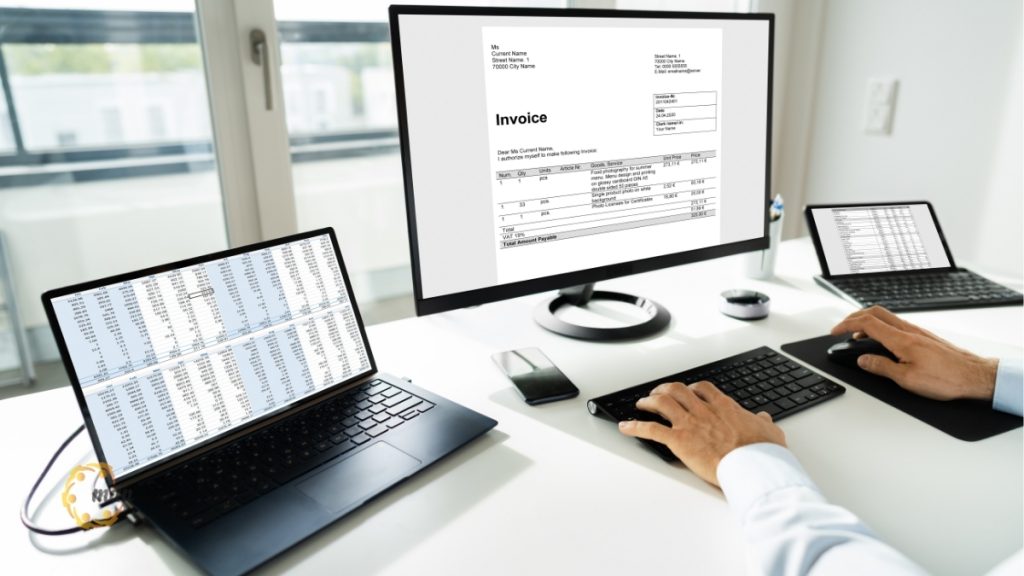

Document archiving and tax settlement are two crucial tasks that determine the legal security and financial transparency of a business during each tax audit and inspection. In the context of increased data digitization and risk control by regulatory agencies, correctly understanding regulations regarding archiving deadlines, electronic invoice formats, and preparing tax settlement documents as prescribed by the Vietnamese Ministry of Finance and the General Department of Taxation of Vietnam is particularly important. This article will provide detailed, updated guidance based on current legal documents, helping businesses archive documents and settle taxes correctly, minimize the risk of tax arrears, and optimize financial management efficiency.
Legal basis for document archiving and tax settlement.
Below is a detailed guide based on current legal documents in Vietnam.
Foundational legal framework
All activities related to document archiving and tax settlement in Vietnam in 2026 must be based on the following legal framework:
- Accounting Law No. 88/2015/QH13: The highest legal document stipulates the principles, content, and organizational structure of the accounting system.
- Decree 123/2020/ND-CP: Regulations on invoices and supporting documents. This is the core document that governs all aspects of using and storing electronic invoices.
- Circular 78/2021/TT-BTC: Guidelines for implementing certain provisions of the Law on Tax Administration and Decree 123.
- Decree 174/2016/ND-CP: This document details certain provisions of the Accounting Law, particularly those concerning the retention and destruction periods for accounting documents.
Retention Period for Accounting Documents: Regulations and Practice

According to Decree 174/2016/ND-CP, the archiving of documents and tax settlement are divided into three specific timeframes:
Store for at least 5 years
This applies to accounting documents used for the management and operation of an accounting unit, including accounting vouchers not directly used for recording accounting entries and preparing financial statements.
For example: Receipts, payment vouchers, and inventory receipt and delivery notes are not kept in the accounting department's records.
Store for at least 10 years.
This is the most important group in document archiving and tax settlement. Applicable to:
- Accounting documents are used directly to record accounting entries and prepare financial statements, summaries, and detailed general ledger accounts.
- Annual financial report, annual budget settlement report.
- Minutes of the destruction of accounting documents and other documents related to bookkeeping and the preparation of financial statements.
Permanent storage
This applies to accounting documents that are historically significant and have economic, security, or national defense implications. Typically, for businesses, these are documents related to capital contributions and key investment projects.
Electronic document archiving process: Deadly mistakes
By 2026, 100% Vietnamese businesses will have transitioned to electronic invoices according to the roadmap of the General Department of Taxation. However, the storage of documents and tax settlement in electronic format still causes confusion for many accountants.
The golden rule: XML is the original document, PDF is just the display version. Many businesses only save PDF files or print them out on paper for storage. According to Article 3 of Decree 123/2020/ND-CP, an electronic invoice is a collection of electronic data. The file with the highest legal validity is the original data file (usually in .XML format).
Steps for secure and legally compliant storage:
- Collection: Download the complete set of XML and PDF files as soon as you receive the invoice from the supplier.
- Validation check: Use the General Department of Taxation's portal to check the operational status of the invoice-issuing business.
- Systematization: Storing data on highly secure cloud computing infrastructure, categorized by month/quarter/year and by expense type.
- Backup: Always have at least two backups in two different physical locations (e.g., Google Drive and a physical hard drive) to avoid the risk of data loss when storing documents and settling taxes.
To avoid unnecessary mistakes, especially during the peak period of the upcoming March 31st tax settlement deadline, and to reduce the burden of taxes, electronic invoices, bookkeeping issues, and financial reporting, businesses can refer to the following guidelines. full accounting service MAN – Master Accountant Network is here to support and accompany businesses through the upcoming stressful period.
The focus of tax settlement work in 2026
In 2026, tax authorities will extensively apply AI and Big Data to risk assessment. The following new aspects should be emphasized in document archiving and tax settlement:
- Personal Income Tax Settlement: With the widespread use of the eTax Mobile application and VNeID electronic identification, individual income data is centralized. Businesses need to ensure that electronic personal income tax withholding certificates are issued correctly and are synchronized with the tax authority's system.
- Legitimate and legitimate expenses: The tax authorities will focus on scrutinizing expenses of a "welfare" nature or expenses that do not directly serve production and business activities but are included to reduce the amount of tax payable.
- Risks from businesses that "abscond": Document archiving and tax settlement must include periodic checks on the legal status of the business partner. If an input invoice belongs to a business that ceased operations before the invoice was issued, that expense will be disallowed and there is a risk of heavy administrative tax penalties.
Legal risks related to document retention and tax settlement.

Businesses need to understand administrative penalties in order to optimize document archiving and tax settlement.
Common violations and penalties
To help businesses better understand the legal risks of violating accounting document retention regulations, current legislation specifies penalties for each act related to document retention and tax settlement. These penalties are primarily stipulated in Decree 41/2018/ND-CP on administrative penalties in the field of accounting. Below is a summary table of common violations and their corresponding penalties that businesses and accounting departments should pay particular attention to in order to avoid unnecessary risks in the management and retention of accounting documents.
| Violation | Fine amount (VND) | Note |
| Accounting records are not being kept in a complete and proper manner as required. | 5.000.000 – 10.000.000 | Penalties are imposed on each accounting period. |
| Loss or damage to accounting documents within the retention period. | 5.000.000 – 10.000.000 | Except in cases of force majeure. |
| Destroying accounting documents before the retention period expires. | 10.000.000 – 20.000.000 | A serious violation of the Accounting Law. |
| No destruction committee was established, and no destruction record was made. | 5.000.000 – 10.000.000 | Violation of procedures. |
As the summary above shows, errors in document storage and tax settlement are not merely operational mistakes but can also lead to significant administrative penalties according to Decree 41/2018/ND-CP and related documents of the Vietnamese Ministry of Finance. Therefore, businesses need to establish procedures for managing, storing, and destroying accounting documents in accordance with regulations, and regularly check their records to avoid legal risks during tax audits and inspections. Strictly adhering to regulations on document storage and tax settlement not only helps businesses limit violations but also ensures transparency and security for all financial data in the long term.
Reference: Accounting consulting services
Required documents when filing tax returns

During the process of preparing and archiving documents and settling taxes, the tax settlement file (audit file) needs to be packaged to include the following components to ensure smooth explanation:
During the preparation process Document archiving and tax settlementTo ensure smooth explanation, the audit file should include the following components:
- Legal documents: Business license, company charter, most recent updated list of contributing members.
- Revenue records: Sales ledger, sales invoices (XML file), economic contracts, and acceptance/liquidation minutes.
- Expense records: Purchase ledger, input invoices, non-cash payment documents (for invoices over 20 million VND), payroll records, and social insurance records.
- Asset records: Inventory cards, summary of inventory movements (inflow, outflow, and remaining stock), fixed asset depreciation schedules, and asset purchase/disposal documents.
- Electronic data: General journals and ledgers of accounts are exported in Excel and XML formats in accordance with Circular 99/2025/TT-BTC (replacing Circular 200/2014/TT-BTC) and Circular 133/2016/TT-BTC.
Reference: Tax settlement services
The "three-layer" reconciliation process before the final settlement period.
To maximize the efficiency of document archiving and tax settlement, experts recommend the following self-checking process:
- Level 1 (Invoice Reconciliation): Verify the accuracy of the electronic invoice statement against the data on the website. hoadondientu.gdt.gov.vnEnsure that no invoices are missed or canceled by suppliers without the accountant's knowledge.
- Level 2 (Payment Reconciliation): Review overdue accounts payable. Ensure all purchase invoices exceeding 20 million VND have proper bank payment documentation with the correct account holder name as stated on the invoice.
- Level 3 (Policy Review): Update the latest legal documents in effect during the fiscal year. For example: VAT reduction policies (if any), cost limits according to specific regulations of the business sector.
A real-world case study on document archiving and tax settlement.
Over more than 30 years in the profession, MAN – Master Accountant Network has witnessed numerous businesses being fined hundreds of millions, and even billions of VND, due to errors in document storage and careless tax settlement. Besides doing it themselves, many businesses and organizations have chosen the safer option of using professional services. accounting services by industry To ensure that applications are always reviewed by experts with extensive practical experience in each specific field.
There is a typical example: A logistics company in Ho Chi Minh City lost all its server data due to a fire. When the tax inspection team arrived, they were unable to provide the original XML files for the years 2021-2023. Although they had PDF prints, the tax authorities still did not accept them as valid documentation.
Lessons learned: Document archiving and tax settlement are not just the responsibility of accountants, but a survival strategy for businesses. Invest in professional document archiving software that can automatically synchronize from the tax portal and back up across multiple platforms.
Conclude
In the context of tax authorities increasingly strengthening data management and applying digital technology in inspections and audits, document storage and tax settlement are no longer just administrative tasks of the accounting department but have become a crucial element in the risk management of businesses. Adhering to regulations on retention periods, electronic document formats, and the procedures for destroying accounting documents as guided by the Vietnamese Ministry of Finance and the General Department of Taxation will help businesses avoid unnecessary penalties, while ensuring the transparency and legality of financial records during tax settlement.
Furthermore, establishing a scientific document storage and tax settlement management system with clear data control and backup procedures will help businesses be more proactive in all tax settlement periods as well as when authorities conduct inspections. Good preparation in document storage today is the foundation for businesses to minimize legal risks, optimize financial management, and ensure sustainable long-term operation.
Contact information MAN – Master Accountant Network
- Address: No. 19A, Street 43, Tan Thuan Ward, Ho Chi Minh City
- Mobile/Zalo: 0903 963 163 – 0903 428 622
- E-mail: man@man.net.vn
Content production by: Mr. Le Hoang Tuyen – Founder & CEO MAN – Master Accountant Network, Vietnamese CPA Auditor with over 30 years of experience in Accounting, Auditing and Financial Consulting.
Frequently Asked Questions about Document Archiving and Tax Settlement
According to Decree 41/2018/ND-CP, the act of losing or damaging accounting documents within the retention period can be fined from VND 5,000,000 to VND 10,000,000. Therefore, the process of archiving documents and settling taxes needs to be carried out with extreme care.
Yes. The Accounting Law 2015 and Decree 123 allow for electronic storage. However, the entity must ensure the security, confidentiality, and accessibility of data when requested by inspectors regarding document storage and tax settlement.
According to Law No. 38 on Tax Administration, the deadline for submitting annual tax returns is no later than the last day of the third month from the end of the calendar year or fiscal year. For 2025, the deadline will be March 31, 2026. What is the penalty for losing accounting documents within the retention period?
Is it possible to store documents entirely in the cloud?
What is the deadline for filing corporate income tax returns for 2025?