
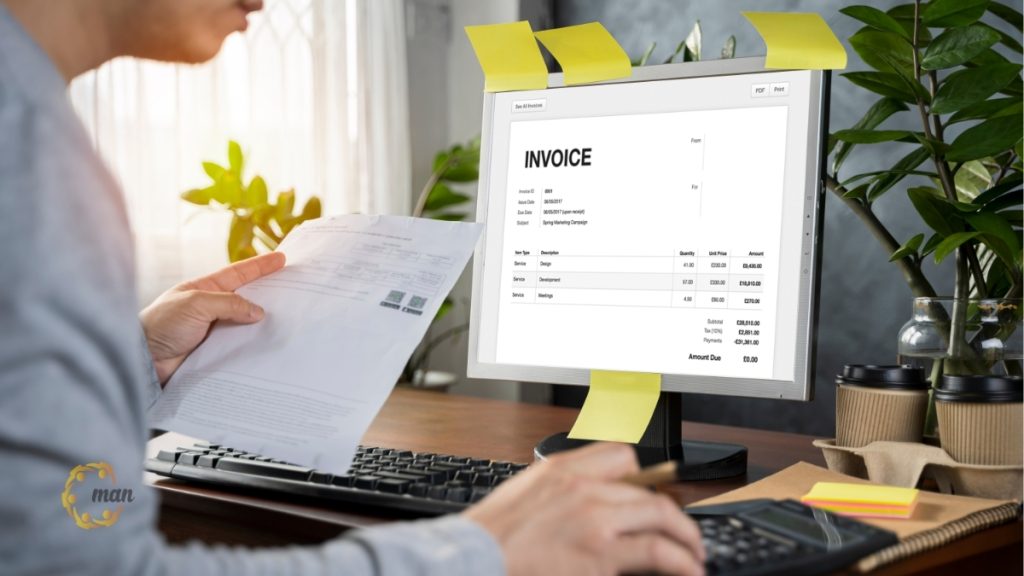
First of all, comparing Decree 254/2026 and Decree 123/2020 is a topic of interest to many businesses, accountants, and household businesses when Decree 254/2026/ND-CP Officially effective from July 1, 2026, replacing Decree 123/2020/ND-CP on invoices and documents. This change not only updates regulations on electronic invoices and documents but also adds many provisions related to the timing of invoice creation, handling of erroneous invoices, invoices generated from cash registers, and the responsibilities of entities involved in the management and use of invoices.
In this article, MAN will summarize and compare Decree 254/2026 and Decree 123/2020 according to important content groups such as scope of application, subjects of application, regulations on electronic invoices, electronic documents, time of invoice issuance, handling of erroneous invoices, and notable new points. All content is analyzed closely following the regulations of the legal documents, helping accountants and businesses easily look up, compare, and apply them in practice.
Overview of the two Decrees on electronic invoices and documents.
Before delving into the specific differences, it's necessary to look back at the context in which these two documents were created, because the differences in their legal basis and the timing of their promulgation have led to a series of subsequent changes.
Decree 123/2020/ND-CP: The old legal framework.
Decree 123/2020/ND-CP, issued on October 19, 2020, regulates invoices and supporting documents in the context of the recently effective Law on Tax Administration No. 38/2019/QH14. This document is based on a series of legal grounds:
- Law on Government Organization 2015
- Law on Tax Administration 2019
- Value Added Tax Law 2008 (along with amendments in 2013, 2014, and 2016)
- Accounting Law 2015
- The Electronic Transactions Law of 2005 and the Information Technology Law of 2016.
In terms of organizational management, Decree 123/2020 identifies the General Department of Taxation as the central agency, operating the General Department of Taxation's electronic portal to receive, issue codes, and search for electronic invoices. This is also the first document that lays the foundation for classifying electronic invoices with and without codes by the tax authority, and invoices generated from cash registers.
Decree 254/2026/ND-CP: Guiding the Law on Tax Administration 108/2025/QH15
Decree 254/2026 is based on entirely new principles:
- Law on Organization of the Government No. 63/2025/QH15
- Law on Tax Administration No. 108/2025/QH15.
This document provides detailed regulations for Clause 6 of Article 26, Clause 4 of Article 27, and other contents as required for management in Clause 5 of Article 52 of this Law.
Regarding its effective date, Decree 254/2026 takes effect from July 1, 2026, simultaneously terminating three previous documents:
- Decree 123/2020/ND-CP
- Article 1 of Decree 41/2022/ND-CP (amending and supplementing Decree 123/2020); and Decree 70/2025/ND-CP.
| Criteria | Decree 123/2020 | Decree 254/2026 |
| Effective date | 01/7/2022 | 01/7/2026 |
| Main legal basis | Law on Tax Administration 2019 | Law on Tax Administration 108/2025/QH15 |
| Regulatory body | General Department of Taxation | Tax Department |
| Operating system | General Department of Taxation's Electronic Information Portal | Tax management information system |
| Paper invoice | Still applicable | No longer usable. |
| Paper receipt | Still applicable | Expires on December 31, 2026 |
Comparison of Decree 254/2026 and Decree 123/2020 regarding scope of application
Both Decrees identify the core groups of subjects to which they apply, including: organizations and individuals selling goods and providing services; organizations and individuals purchasing goods and services; organizations collecting taxes, fees and charges; taxpayers; tax administration agencies and related organizations and individuals.
New points added in Decree 254/2026
When comparing Decree 254/2026 and Decree 123/2020, it can be seen that the target group in the new document is broader and more specific:
- Cooperatives and cooperative unions are grouped together with economic organizations under point a, clause 1, Article 2, along with enterprises, branches, and representative offices of foreign enterprises.
- A completely new group of entities has been added: Foreign organizations, including the owners of e-commerce platforms and digital platforms located abroad, that conduct business on e-commerce platforms and generate taxable revenue in Vietnam (referred to as foreign suppliers). This group is allowed to voluntarily register to use electronic invoices as stipulated in the Decree, a provision that was not previously mentioned in Decree 123/2020.
- Please clarify the group: Organizations and individuals who file and pay taxes on behalf of others, as stipulated by tax laws and tax administration laws.
See more: Full text of Decree 254/2026/ND-CP.
Comparison of Decree 254/2026 and Decree 123/2020 regarding types of electronic invoices.

While the scope of application only underwent a broader change, Decree 254/2026 represents a decisive shift in invoice types, a crucial point that any entity still using paper invoices should understand immediately.
Decree 123/2020/ND-CP: Printed paper invoices
Decree 123/2020/ND-CP dedicates Section 3, Chapter II to regulating "Invoices printed by the tax authority," referring to paper invoices printed by provincial and city tax departments for sale to entities that do not yet meet the requirements for information technology infrastructure. This includes a detailed process for selling invoices, handling lost, burned, or damaged paper invoices, and destroying them.
Decree 254/2026/ND-CP: Completely phasing out pre-printed invoices.
This is one of the most significant differences when comparing Decree 254/2026 and Decree 123/2020. The new Decree stipulates that from the effective date of the Decree, printed invoices issued by the tax authority become invalid. Tax authorities, economic organizations, business organizations, household businesses, and individual businesses currently using unused printed invoices must destroy them according to the procedures prescribed by the Minister of Finance.
Furthermore, Decree 254/2026 introduces a completely new concept: electronic commercial invoices, applicable to economic organizations, business households, and individual businesses engaged in exporting goods or providing services abroad, provided the exporter meets the conditions for electronically transferring commercial invoice data to the tax authorities. If this condition is not met, the exporter can only choose between electronic value-added tax invoices or electronic sales invoices.
Furthermore, the concept of electronic invoices generated from cash registers with data connections to the tax authorities is also more clearly and coherently defined with three core principles:
- Identify the source of cash register receipts;
- A digital signature is not required;
- Expenditures for goods and services using electronic invoices are considered to have sufficient legal invoices and supporting documents when determining tax obligations.
The difference lies in the categories of entities required to use electronic invoices from cash registers.

This is a topic of particular interest to many accountants, especially those in the retail, food and beverage, and service industries.
Decree 123/2020 lacks a separate, clearly defined provision outlining the sectors required to use electronic invoices generated from cash registers. Meanwhile, point c, clause 1, Article 6 of Decree 254/2026 specifically lists the mandatory sectors:
- Shopping malls, supermarkets, retail stores;
- Food and drink, restaurants, hotels;
- Passenger transportation services;
- Services that directly support road transport;
- Arts, entertainment, and recreation services;
- And other personal services according to the Vietnamese Economic Classification System.
More notably, point d of clause 1, Article 6 introduces a completely new and specific revenue threshold:
Household businesses and individual businesses with annual revenue exceeding 1 billion VND, or those engaged in the sale of assets requiring registration of ownership or usage rights, are required to use electronic invoices with tax authority codes or electronic invoices generated from cash registers connected to the tax authority's data system.
This is a clear quantitative benchmark that Decree 123/2020 does not specify, making it easier for business households to determine their own obligations.
Comparing the timing of invoice issuance: What are the differences between Decree 254/2026 and Decree 123/2020?

Essentially, the principle for determining the timing of invoice issuance remains the same in both documents:
- For the sale of goods, the time of transfer of ownership or the right to use the goods to the buyer is the time when payment has been received, regardless of whether payment has been received or not.
- For service provision, the time of completion of the service provision is the time of payment, or the time of payment if the seller collects payment before or during the provision of the service.
Specific cases are added in Decree 254/2026.
When comparing the details of Clause 4, Article 9 of both Decrees, it can be seen that Decree 254/2026 significantly supplements and expands the list of specific cases:
- Export of goods: Decree 254 adds a very specific timeframe that Decree 123/2020 did not have, which is the time of issuing electronic commercial invoices, electronic value-added tax invoices, or electronic sales invoices determined by the seller, but no later than the next working day from the date the goods are cleared according to customs law (Clause 1, Article 9).
- Periodic reconciliation services group: Point a, Clause 4, Article 9 expands to include many completely new areas compared to Decree 123/2020, such as: crypto asset services, services supporting transactions on carbon exchanges, maritime pilotage services, computerized lottery, road usage fee collection between investors and fee collection service providers, security services, industrial catering services, commodity exchange services, and credit information services.
- Lending activities of credit institutions: Point k, Clause 4, Article 9 stipulates that the time of invoice issuance is determined according to the interest collection period in the loan agreement; if interest is not collected by the due date, the time of invoice issuance is the actual time the interest is collected. This is completely new content, never before seen in Decree 123/2020.
- Casino and electronic gaming businesses: Point q, Clause 4, Article 9 stipulates that electronic invoices must be issued no later than one day after the end of the period, and the data on the collected amount must be transferred to the tax authority at the same time as the invoice data. This is also a completely new regulation.
- Traditional lottery ticket business: Point p, Clause 4, Article 9 adds a separate regulation on the creation of an electronic value-added tax invoice with a code for each agent, based on the lottery tickets sold during the period.
In cases where a business does not have a dedicated accountant to closely monitor these legal changes, the solution is... hire an external accountant It is also a worthwhile option to consider to ensure compliance without creating an additional internal staffing burden.
Electronic documents: Key changes between the two Decrees
Decree 123/2020 classifies documents as follows:
- Personal income tax deduction certificate;
- Pre-printed receipts with denominations;
- The receipt does not have the denomination printed on it;
- General receipt.
Decree 254/2026 simplifies the process into two distinct groups:
- Personal income tax deduction certificate
- Receipts for taxes, fees, and charges.
It is noteworthy that Decree 254/2026 clearly stipulates:
Unused self-printed or pre-printed paper receipts may only be used until December 31, 2026.
In other words, from January 1, 2027, all unused paper receipts must be destroyed, and organizations using paper receipts must completely switch to electronic receipts in a standard data format.
Furthermore, Clause 7 of Article 4 of Decree 254/2026 adds a new mechanism: in cases where an organization collecting taxes, fees, and charges and a service provider jointly collect taxes, fees, charges, and sales proceeds from goods and services from a single customer, the receipts and invoices may be integrated into a single electronic format for delivery to the buyer, with the requirement that both parties clearly agree on the unit responsible for creating the integrated invoice and notifying the directly managing tax authority. This content is completely absent from Decree 123/2020/ND-CP.
The most notable new feature is found only in Decree 254/2026/ND-CP.
In addition to the points already analyzed, when comparing Decree 254/2026 and Decree 123/2020, there are several groundbreaking new points that accountants need to pay special attention to:
- The mechanism rewards consumers who report sellers who fail to issue and provide electronic invoices when selling goods or providing services. The reward amount shall not exceed the administrative fine imposed, with a maximum of 10,000,000 VND per case. Consumers can report violations through the electronic invoice system, the National Public Service Portal, the tax authority's email, or by submitting the report directly at the tax authority's headquarters.
- The regulations provide more specific and detailed instructions on handling system failures in the tax authority's code issuance process, stipulating that the Tax Department is responsible for activating the backup system, publicly announcing the scope of impact, and may authorize qualified electronic invoice service providers to issue replacement codes.
- The regulations clearly define cases of force majeure (war, riots, strikes requiring the suspension or cessation of production or business activities, or risks not attributable to the seller's subjective causes or responsibilities). The seller is allowed to issue and send electronic invoices within 3 working days from the date the problem is resolved.
See more: Invoices must be issued in accordance with Decree 254/2026/ND-CP.
Summary table comparing Decree 254/2026 and Decree 123/2020
For quick comparison, here is a summary table of the most key differences between the two Decrees.
| Criteria | Decree 123/2020 | Decree 254/2026 |
| Validity | 01/7/2022 | 01/7/2026 |
| Legal basis | Law on Tax Administration 2019 | Law on Tax Administration 108/2025/QH15 |
| Paper invoice | Still applicable | The Decree becomes invalid as soon as it takes effect. |
| Regulatory body | General Department of Taxation | Tax Department |
| Foreign nationals | There are no regulations yet. | Voluntary registration |
| The threshold for businesses to use electronic invoices. | Not yet regulated | Annual revenue exceeding 1 billion VND. |
| Rewarding whistleblowers | Do not have | Yes, a maximum of 10,000,000 VND per case. |
| Paper receipt | Still applicable | Expires on December 31, 2026 |
| Electronic invoices | There are no regulations yet. | Specific provisions in Article 8.3 |
Looking at the table above, it's clear that most of the changes revolve around a single overarching goal: completely eliminating traditional paper-based systems while tightening the invoicing obligations of entities previously outside the scope of strict control.
What do businesses and accountants need to do to make the transition?
After understanding the differences between Decree 254/2026 and Decree 123/2020, accounting departments in businesses and household businesses should proactively carry out the following tasks:
- Review all remaining printed paper invoices and receipts before June 30, 2026, to develop a plan for their destruction in accordance with the procedures and guidelines of the Minister of Finance.
- Update and upgrade your current electronic invoicing software to ensure compatibility with the new standard data format.
- Verify whether your business or household business falls under the category of those required to use electronic invoices generated from cash registers, especially those operating in the retail, food and beverage, and consumer service sectors.
- For household businesses and individual business owners: Check if the revenue of the previous year exceeded 1 billion VND to proactively register for the use of electronic invoices within the deadline, avoiding administrative penalties for invoice violations.
- Closely monitor the Ministry of Finance's guiding circulars on forms, data formats, and conversion procedures that will be issued alongside Decree 254/2026 in the near future.
If the internal accounting department lacks the resources to both review outstanding invoices and update procedures according to Decree 254/2026, businesses can consider using alternative methods. full accounting service It is advisable to seek assistance from specialized and experienced units such as MAN – Master Accountant Network to ensure timely data conversion and avoid errors when the tax authorities cross-check the data.
Conclude
Throughout the entire process of comparing Decree 254/2026 and Decree 123/2020, there are three core points that accountants and business owners need to remember:
- Printed paper invoices will become invalid from July 1, 2026.
- Paper receipts will only be used until December 31, 2026, and businesses with annual revenue exceeding 1 billion VND are required to switch to electronic invoices.
Furthermore, the expansion of the scope to include foreign suppliers, along with the incentive mechanism for consumers who report violations, clearly demonstrates the new decree's aim for stricter management and increased transparency in transactions.
With the two key timelines mentioned, proactively reviewing outstanding invoices and documents and updating processes now will help businesses avoid the risks of being caught off guard and making mistakes during the transition.
Contact MAN – Master Accountant Network For free support and advice!
Contact information MAN – Master Accountant Network
- Address: No. 19A, Street 43, Tan Thuan Ward, Ho Chi Minh City
- Mobile/Zalo: 0903 963 163 – 0903 428 622
- E-mail: man@man.net.vn
- Google Business Profile: View MAN – Master Accountant Network's Google Business Profile
- LinkedIn Founder: View expert Le Hoang Tuyen's LinkedIn profile.
Responsible for production and professional content review by: Mr. Le Hoang Tuyen – Founder & CEO of MAN – Master Accountant NetworkHe is a CPA Vietnam auditor with over 30 years of in-depth experience in accounting, auditing, taxation, and corporate legal consulting.
Frequently Asked Questions when comparing Decree 254/2026 and Decree 123/2020
No. According to Article 44.3 of Decree 254/2026/ND-CP, invoices printed by the tax authority become invalid from the date this Decree takes effect, and any unused portion must be destroyed in accordance with regulations.
These paper receipts will continue to be used until December 31, 2026. From January 1, 2027, all unused paper receipts must be destroyed in accordance with the instructions of the Ministry of Finance.
According to point d, clause 1, Article 6 of Decree 254/2026, business households and individual businesses with annual revenue exceeding 1 billion VND, or those engaged in the sale of assets requiring registration of ownership or usage rights, are required to use electronic invoices with tax authority codes or electronic invoices generated from cash registers connected to the tax authority's data system. Will printed paper invoices still be used after July 1, 2026?
How long can self-printed or pre-printed paper receipts be used?
What revenue level does a household business need to have to be required to use electronic invoices?






